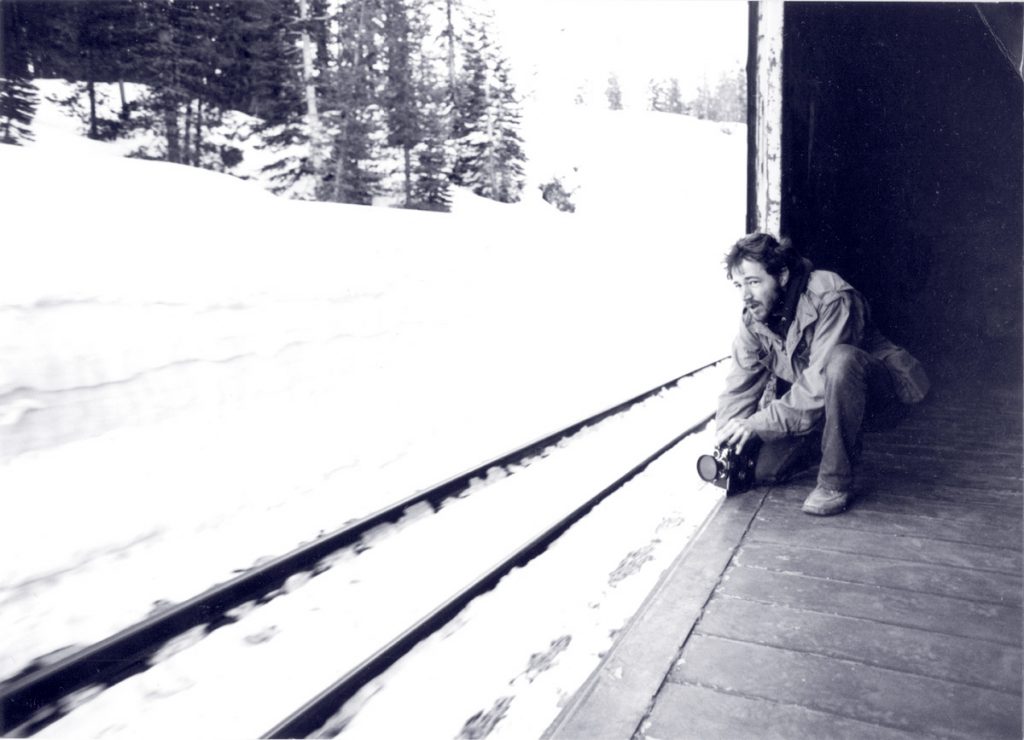
Who Is Bozo Texino? (USA, 2006) 55 min B&W DIR-DOP: Bill Daniel.
“I guess you could say there’s a mystery to it; maybe you want it to be a mystery.”
The best film I saw in all of 2006 was Who Is Bozo Texino?, a mesmerizing 55-minute documentary by Bill Daniel, shot in glistening black and white. The novel premise, about the search for the identity of a railroad graffiti artist, would make for an intriguing film alone, but it is so much more. This piece of work is a stunning decoupage of sight and sound- such a dense montage of striking visual compositions, and impressionistic voiceover that one can scarcely believe it runs less than an hour.
Viewing Bozo Texino is to get the feeling of entering a secret society, and in fact, even attending this screening gave that impression. Only having learned about the event by one posting on a website, the rest of the clientele however already seemed to be “in the know”. The sense of being inaugurated into a subterranean culture is perhaps the perfect kind of inertia needed to view this film, as throughout its running time, the story thread is as elusive as its subject. (This screening opened with Bill Daniel’s 2-minute short subject, The Underground Square Dance Association– a hilarious piece about another subterranean culture, which set the tone.)
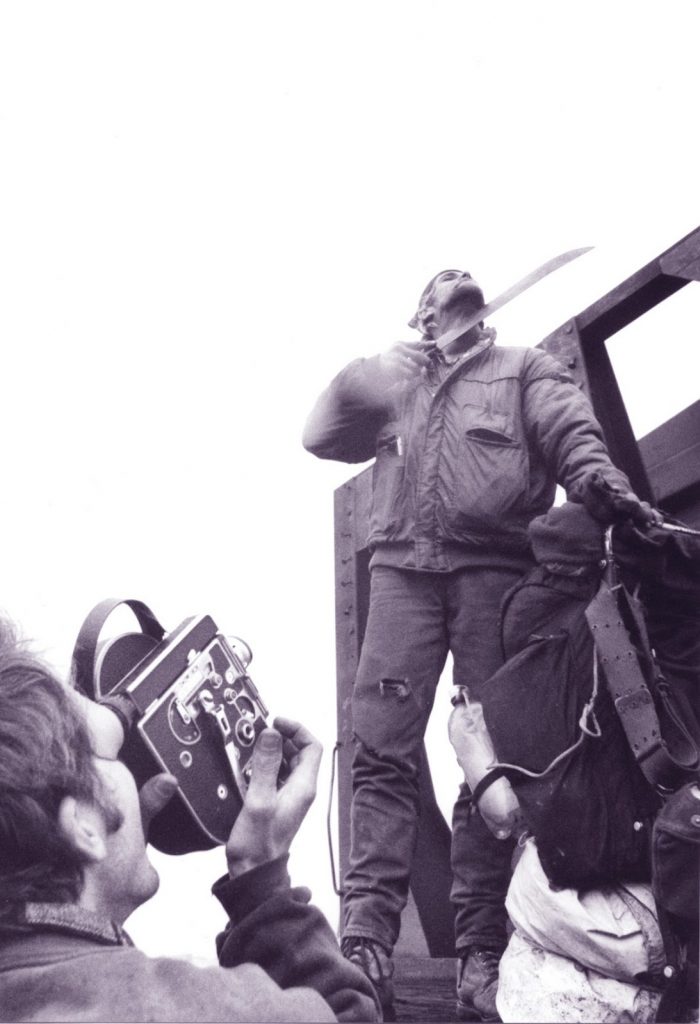
The concept of people “riding the rails”, hobos hopping a freight train to a new frontier, harkens images of the Depression Era, yet, as one narrator suggests, the tradition dates back to Jack London era, the 1890s. This custom of hopping on a freight train has outlaw romanticism, with the hobo (not a “bum”, but a “hobo”) as the classical renegade figure, defying responsibility and authority by charting their own destination on the rails. And to think that this tradition continues today is perhaps surprising, but that is also part of the film’s appeal. Although a lot of the people who speak on film are leathery, weather-beaten old men, one gets the impression that this tradition will continue, with the brief shots of young hippies running for a train. Very early in the film, we understand why this romantic notion continues in today’s society, with a breathtaking shot of a hobo in a boxcar looking at a mountain range. It prefaces one man’s later observation: “To be absent from society is to be on a higher plane.”
During the making of this 16-year project, Bill Daniel has also edited for Craig Baldwin’s equally dense, found-footage collages. That pursuit has served him well here, as it is a rhythm-perfect piece of film music, with crescendos and well-placed diminuendos. Seeing this flurry of images and sounds in such a fragmented frenzy, one gets the whirlwind feeling of teetering from a locomotive. And in moments when the film slows to a Zen calm (where a single shot will play for a couple of minutes), it gives one the impression of a good rest at the end of the journey.
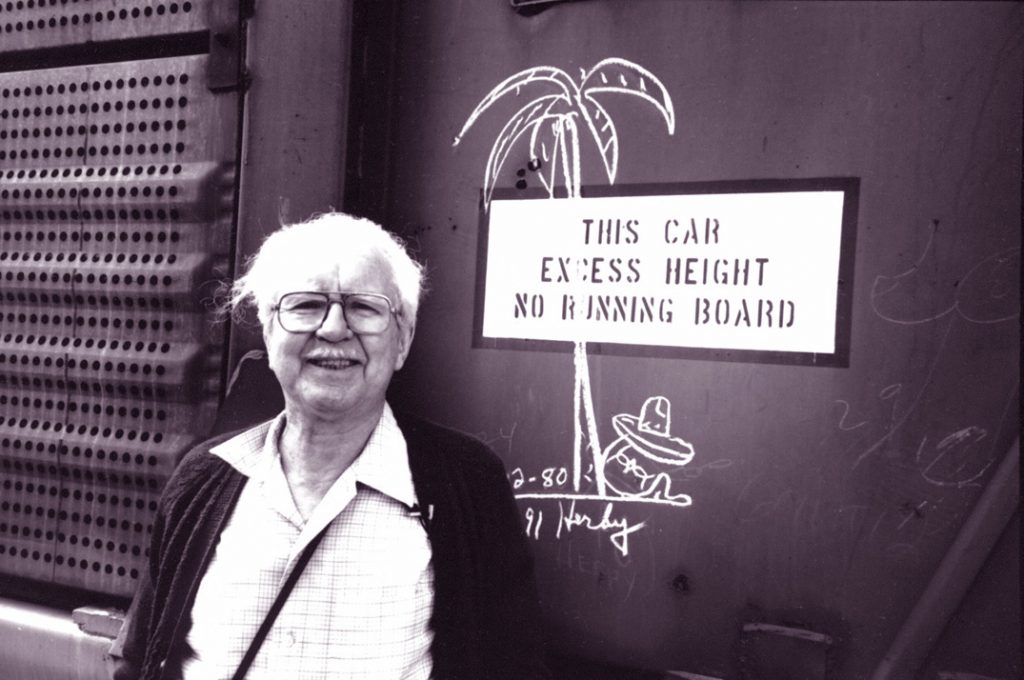
What is more, this remarkable film implodes the conventions of documentary, with its multitude of narrative viewpoints. Its huge ensemble of voices is presented in as much a dizzying, disorienting fashion as the visuals. Despite that we see some railroad riders onscreen in several scenes, they remain strangers to us. They remain as phantom-like as the plethora of signatures and drawings on the trains that we see throughout. A conventional A&E documentary would probably have started right off the bat with some exposition on Bozo Texino, yet we first see a (fleeting) shot of Texino’s drawing at the ninth minute, and only at the eighteenth (when nearly one third of the film has elapsed) does someone first mention his name. Since this hour-long film is a condensation of a lifetime on the tracks, it makes sense that we only gradually learn of the central character, just as someone gradually would hear these stories as legends while riding on the trains.
While perhaps documentary in its structure of talking heads, narration and candid shots of people catching rides on trains, this film is perhaps more documentary-like in giving the viewer a synthesis of what it is like to hop a freight train to parts unknown. Its disorienting approach also compliments the fuzzy narrative, as this subculture is full of people who assume others’ identities. John Easley, for instance, has adopted the signature of an older man named Coltrane (whose trademark is an Old West scout with long hair and a huge moustache). As such, we hear conflicting opinions as to who is really signing the trains as Bozo Texino. As in the case of Citizen Kane, perhaps we really don’t want to know the revelation of “Rosebud”.
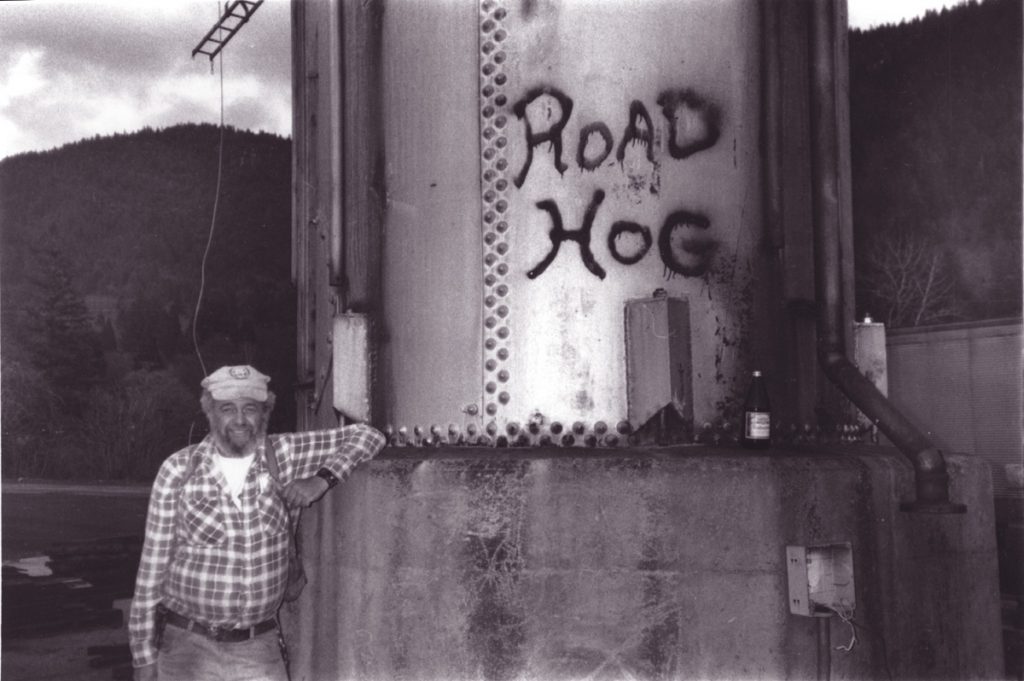
Because this subculture is so steeped in legend and lore, finding the truth in behind perhaps robs it of its mystical quality. This journey to the truth behind Bozo Texino is perhaps another metaphor for the train ride—the destination matters less than the road trip. On screen and on paper, Who Is Bozo Texino gives us a representation of a long exhilarating ride, with its blurry narrative and blinding editing, as a life of memory and folklore is distilled into one hour. Even more, each of these fleeting images is a miniature work of art in itself. With the meticulous attention to frame composition and rich contrasts, Bill Daniel ably validates this vanguard lifestyle as an overwhelming experience.
It is perhaps over-simplifying this bohemian existence by romanticizing its freedom from the clutches of modern society, but how this film is being shown to the audience adds to that mystique. Avoiding the usual trappings (literally and figuratively) of the film festival circuit, Bill Daniel has been traveling the continent in his van to show the film: fitting for the “wandering spirit nature” of its subject. Seeing it in a cold, wooden screening facility one October night further added to the visceral experience of this truly remarkable movie.
While you should see Who Is Bozo Texino on a big screen somewhere, somehow… you can purchase DVD’s of the film. Log on to www.billdaniel.net to find out how.
Originally presented in Vol. #1, Issue #18, “Discoveries”.
Greg Woods

Greg Woods has been a film enthusiast since his teens, and began his writing "career" at the same time- prolific in capsule reviews of everything he had watched, first on index cards, then those hardcover dollar store black journals, then an old Mac IIsi. He founded The Eclectic Screening Room in 2001, as a portal to share his film love with the world, and find some like-minded enthusiasts along the way. In addition to having worked in the film industry for over two decades, he has been a co-programmer of films at Trash Palace, and a programmer/co-founder of the Toronto Film Noir Syndicate. He has also written for Broken Pencil, CU-Confidential, Micro-Film, and is currently working on his first novel. His secret desire is for someone to interview him for a podcast or a DVD extra.