Keep My Grave Open (USA, 1976) 80 min color DIR-PROD: S.F. Brownrigg. SCR: F. Amos Powell. MUSIC: Robert Farrar. DOP: Janis P. Valtenbergs. CAST: Camilla Carr, Stephen Tobolowsky, Ann Stafford, Gene Ross, Annabelle Weenick, Bill Thurman, Chelsea Ross.
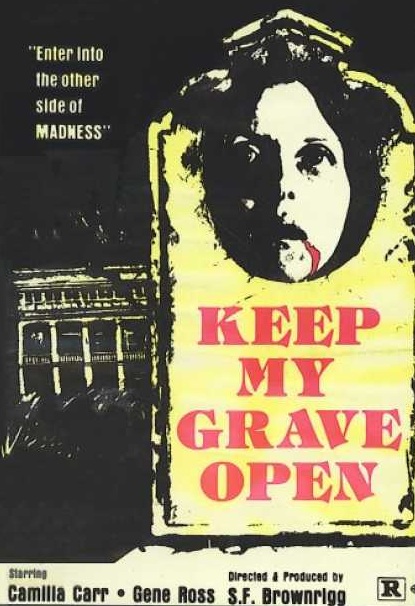
Of his four regional horror films produced in the 1970s, director S.F. Brownrigg considered Keep My Grave Open to be his personal favourite. I share this opinion, perhaps because this was the first film of his I had seen (and therefore the film where his style was first impressed on me), but it is also his most satisfying.
The opening sequence is representative of what I love about Brownrigg. For all of its onscreen savagery, his work has a leisurely, poetic side. The narratives take their time to unfold, as slowly as life would in their remote rural settings: the emphasis is more on atmosphere and quirky characters.
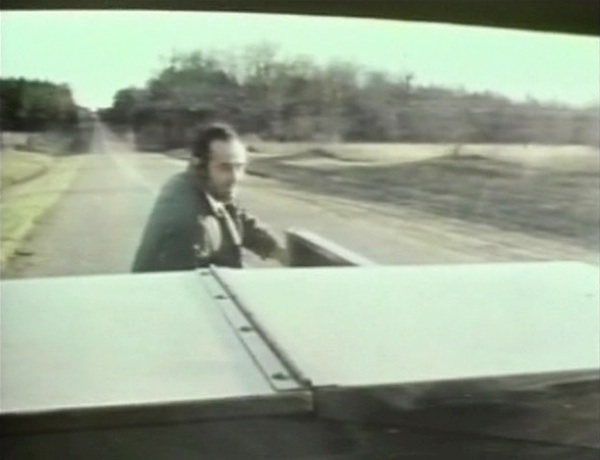
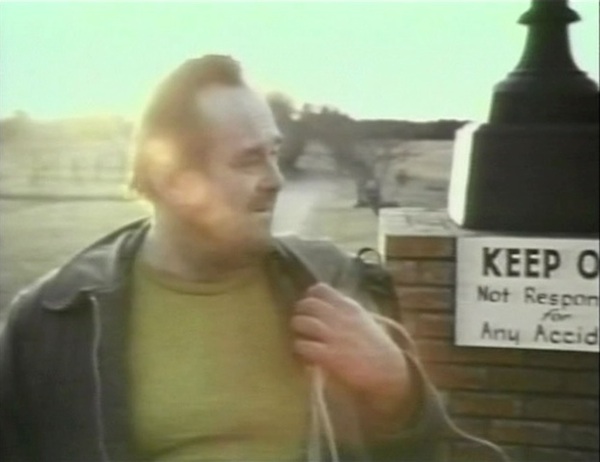
In the mesmerizing opening, we see a hobo on the back of a flatbed truck, as seen through the rear window of the cab. It is a shot that is so simple yet so layered. And like most compositions in this film, the sequence plays longer than one expects. A film full of murders and madness is also strangely serene. The hobo (played by Larry Buchanan regular Bill Thurman) gets off the truck and wanders onto the Fontaine estate, which boasts the sign: “Keep out- not responsible for any accidents.” The tramp gets into the house, raids the refrigerator, swaps his rotgut for the good wine, and then heads back outside for a cookout. And then, he is hacked to death beside his campfire. This is nine minutes of a movie that is barely eighty minutes long!
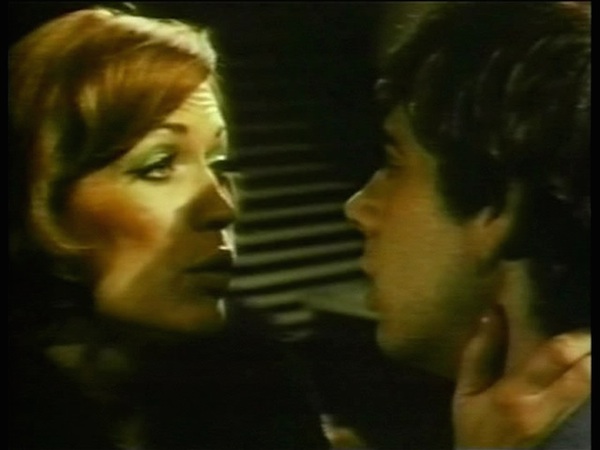
Ultimately, this movie is a haunted love story, with most of its running time spent in the mind of Lesley Fontaine (Camilla Carr, in her most substantial role). Her obsessive, unnatural love for “Kevin” troubles her doctor (Gene Ross), suggests that she needs go back to the hospital for her mental wellbeing. The doctor even offers to speak to Kevin about her condition, and she refuses.
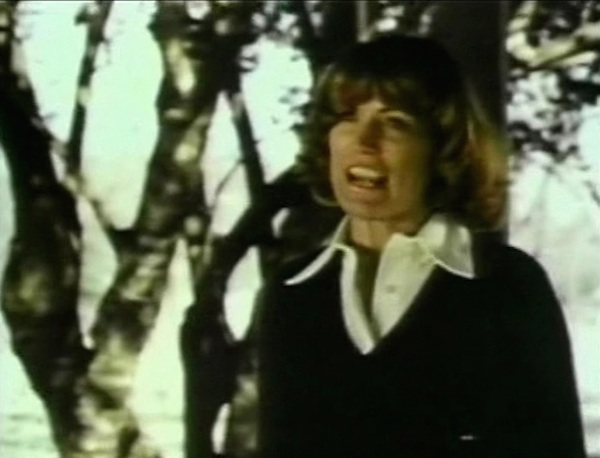
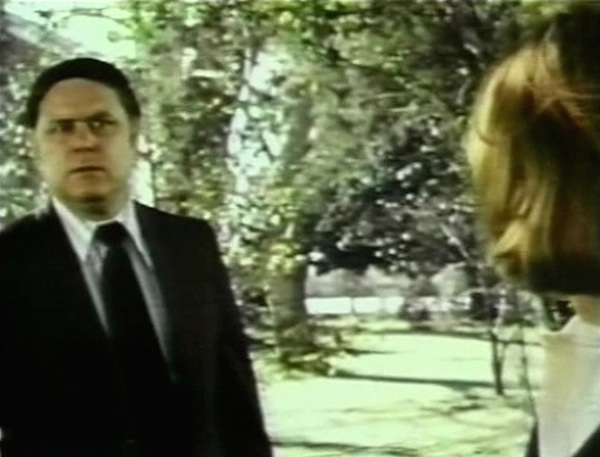
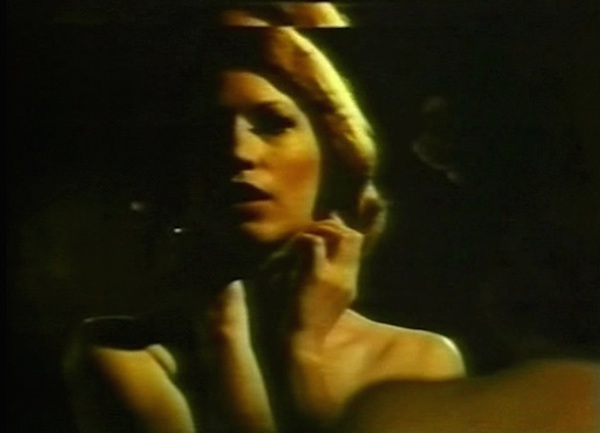
“Kevin” is never seen on camera. Lesley is always yelling at him offscreen, usually about her unrequited love. One shot that plays for several minutes, features Lesley in bed being seduced by Kevin, shot from his POV. The viewer is put into an awkward position of vicariously making love to Camilla Carr. Once the camera assumes the missionary position, it quickly moves away from Lesley, unfulfilling her desires.
There is a younger couple in the story with similarly unfulfilled desires. Fontaine’s stablehand Robert (Stephen Tobolowsky, in his first film) has a blossoming relationship with young Suzie (Ann Stafford), who is killed just prior to a sexual rendezvous. Later, after the POV “love scene” cited above, Lesley attempts to seduce Robert out of her frustration with Kevin, and as sexual blackmail, so that Robert can enter a horse in a championship. But before the act is committed, Robert becomes the next murder victim.
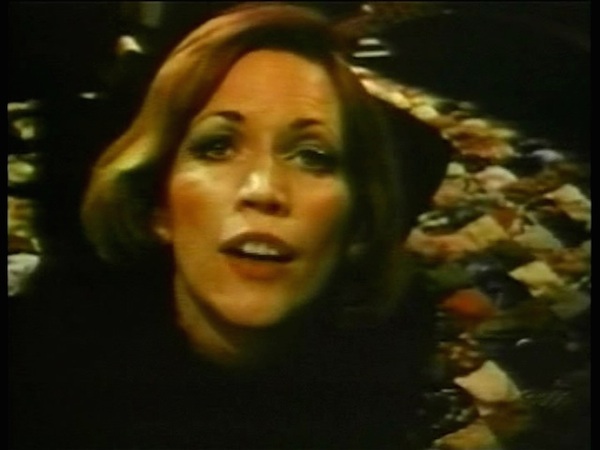
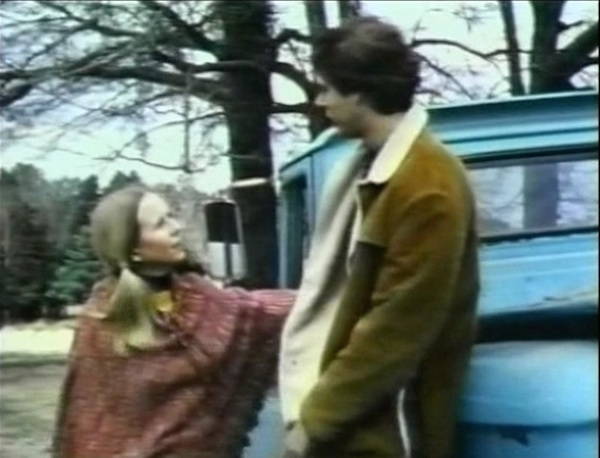
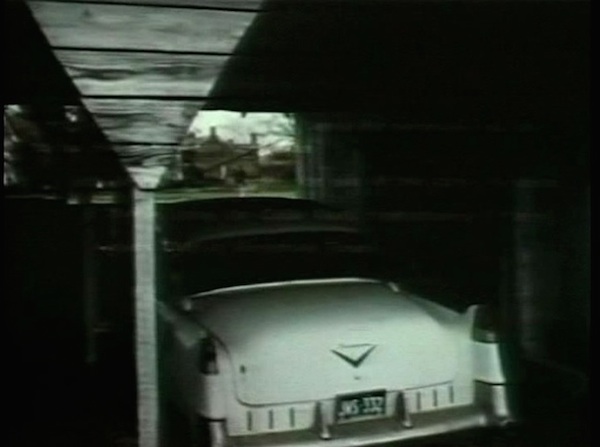
Lesley then brings home a prostitute in another effort to please Kevin, and in an elaborately shot sequence, the woman is pursued around the estate by her killer, and attempts to hide in a car, only to find that all of the previous victims have been left there.
Horror fans would would likely be guessing the surprise revelation. As the few principal characters begin to diminish, we expect things to wrap up a certain way, but the narrative gets cloudier. Our assumptions about the Lesley-Kevin relationship are subverted. Brownrigg cleverly uses the camera to represent this offscreen “Kevin” figure, and make the film a visceral experience. We vicariously live within the damaged mind of Lesley Fontaine.
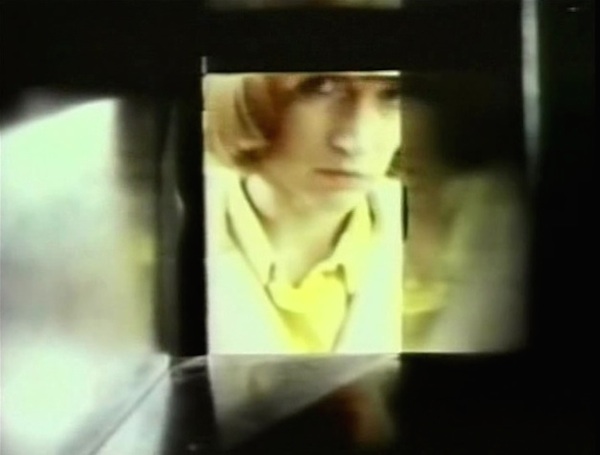
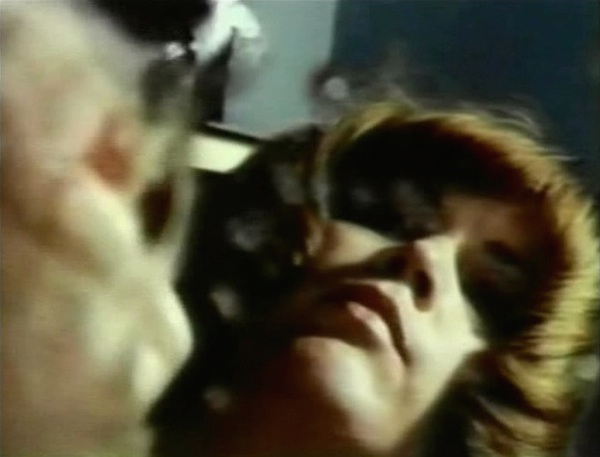
As always, Brownrigg’s film is a feast of inventive visual ideas. The use of oblique angles even in such mundane scenes as making coffee, or creative ideas like shooting from inside a cupboard, make the familiar seem otherworldly and mysterious: fitting for a narrative where we constantly question what we’re seeing. Keep My Grave Open has shocking bursts of violence, but one more remembers the quiet touches, like the pastoral opening, and dissolves within the same shot showing progressions of time, adding to the narrative’s dreamlike feel.
After this release, Brownrigg left the movies for a more economically stable occupation, at a time when most regional cinema was winding down. Drive-ins were closing for more profitable real estate; the movie industry was changing from interesting niche markets into products for mass consumption. S.F. Brownrigg made one return to cinema, with the teen comedy, Thinkin’ Big (1986), before his untimely death in 1996 at the age of 58.
Keep My Grave Open is arguably Brownrigg’s finest picture, and one of the best examples of “regional horror”. If ever a film needed a restoration and re-appraisal by a boutique company like Vinegar Syndrome or AGFA, this would be it. All current DVD and streaming releases appear to be sourced from an old VHS release. (As of this writing, the film is available to view on Tubi with the alternate title, The House Where Hell Froze Over. Check out how bad the title card insert is on this version.)
An update of a piece originally published in Volume #1, Issue #22, “Cheap Horror Movies And Why We Love Them”.
Greg Woods

Greg Woods has been a film enthusiast since his teens, and began his writing "career" at the same time- prolific in capsule reviews of everything he had watched, first on index cards, then those hardcover dollar store black journals, then an old Mac IIsi. He founded The Eclectic Screening Room in 2001, as a portal to share his film love with the world, and find some like-minded enthusiasts along the way. In addition to having worked in the film industry for over two decades, he has been a co-programmer of films at Trash Palace, and a programmer/co-founder of the Toronto Film Noir Syndicate. He has also written for Broken Pencil, CU-Confidential, Micro-Film, and is currently working on his first novel. His secret desire is for someone to interview him for a podcast or a DVD extra.