
Wattstax (USA, 1973) 103 min color DIR: Mel Stuart. PROD: Larry Shaw, Mel Stuart. DOP: John A. Alonzo, Larry Clark, Robert Marks, José Louis Mignone, Roderick Young, David Myers. STARRING: Isaac Hayes, Richard Pryor, The Dramatics, The Staple Singers, The Emotions, The Newcomers, Eddie Floyd, Frederick Knight, The Bar-Kays, Albert King, Little Milton, Johnnie Taylor, Mel Hardin, Carla Thomas, Rufus Thomas, Luther Ingram, Rev. Jesse Jackson, Ted Lange. (Warner Home Video)
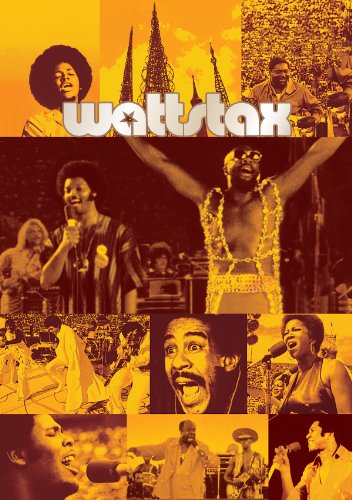
On August 20th, 1972, Stax Records staged a landmark concert event at the Los Angeles Coliseum, held to commemorate the seventh anniversary of the Watts riots, and to show solidarity with the struggling African-American community. Stax Films, in collaboration with Wolper Pictures, assembled Wattstax as a filmed record of the star-studded music festival, which drew an unprecedented audience of 100,000 people.
Helmed by director Mel Stuart (who had directed Willy Wonka and the Chocolate Factory a year earlier), Wattstax is an ambitious documentary which transcends the standards of the concert film. To contextualize the occasion, concert footage is interspersed with potent monologues by young comedian Richard Pryor, and lively interviews with Watts citizens shot on their home turf. Described by Pryor in his introduction as “a soulful expression of the black experience,” Wattstax is a unique and engaging film effort, which remains a powerful historic document.
Music and live performances are the central focus of Wattstax, showcasing the diverse wealth of talent represented by Stax Records. The Memphis-based label was a primary source of African-American popular music in the ’60s and early ’70s (along with the more pop-oriented Detroit label Motown), from soul and blues to gospel and funk. Wattstax offers an excellent cross-section of the Stax roster in action, and is a great primer for those unfamiliar with the extraordinary sounds of the label. The film opens with a rousing speech by Reverend Jesse Jackson (sporting a sizeable afro), who brings the audience to their feet to chant “I am somebody!”, followed by Kim Weston’s stirring rendition of the “black national anthem,” “Lift Every Voice and Sing.” The main event soon gets underway, with a series of consistently high-calibre performances, although many of the songs are only shown in partial clips, leaving the viewer wanting more. Highlights of the show include: Memphis soul pioneer Rufus Thomas (crowned the “Prince of Dance”), who inspires the exuberant crowd to “Do The Funky Chicken”; the deeply soulful groove of the Staple Singers’ “Respect Yourself”; The Bar Kays’ (hilariously decked out in Egyptian- inspired stage wear) heavy wah wah pedal funk number “Son of Shaft”; formidable blues talent Albert King; and the beautiful, soaring vocals of Carla Thomas.
To give further dimension to the film, several Stax artists are filmed performing at other locations, outside of the stadium show. The Emotions interpret the gospel number “Peace Be Still” at a service in a small local church; Little Milton is filmed singing and playing guitar on an abandoned outdoor railway platform to his song “Walking the Back Streets and Crying”, in what could pass for an early music video; and Johnnie Taylor is captured giving a heated, dynamic reading of “Jody” before a nightclub audience decked out in high ’70s urban fashion, pimp hats and fur coats abounding.
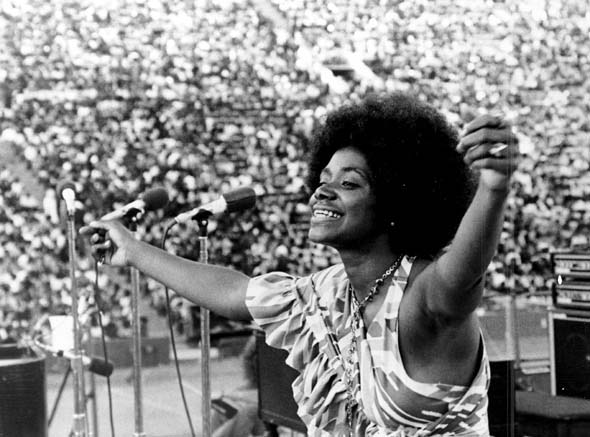
The bountiful music footage in Wattstax is balanced out by documentary and interview material, and punctuated by the running comedic rants of Richard Pryor. Watts is presented as a microcosm of Black America, and as the film explores the concerns and the hardships of this specific locale, it offers a perspective on similar issues confronting African-Americans across the nation at large. People of the community are candidly interviewed in a number of familiar neighbourhood settings, from barbershops and greasy spoons to work environments and street corners. The discussion is frank, animated, and often very amusing, covering topics from music to sexual politics to racial tensions to black empowerment. Modern audiences will probably find much of this banter unintentionally funny and dated (Ted Lange, aka “Isaac Washington” on The Love Boat, is one of the interviewees). However, it is through these segments that the film attempts to get to the heart and soul of the community, giving voice to several topics that would become dominant lyrical themes in rap and hip-hop music. Pryor is considered the “commentator” of the proceedings, providing some comic relief lest the film become too serious. He is in his element and his prime, and no-one is beyond the reach of his caustic humour, black or white.
The 2004 Special Edition DVD re-release of Wattstax restores the originally-conceived ending to the film: two vital songs by superstar Isaac Hayes, which were absent from the 1973 cut due to legal interference, replaced at the time with an inferior substitute performance shot on a soundstage (this alternate ending remains as an extra on the DVD). It’s hard to imagine Wattstax without the triumphant finale of Isaac Hayes, then symbolically known as “The Black Moses,” coming onstage in his colourful robe like a boxing heavyweight, receiving a sensational introduction by Rev. Jesse Jackson, and emerging to the funky strains of his mega-hit “Shaft.” Hayes closes out the film with “Soulsville,” a slower soul number which lyrically summarizes many of the themes running through the film.
As a film, Wattstax has certain structural shortcomings. The edits can be a bit choppy, jumping from in-concert segments to talking heads, from nightclubs to street scenes, from storefront churches to montages of civil rights clashes and images of the Watts riots. But if Wattstax overreaches at times in its attempt to encapsulate the spirit and culture of African-America in the early ’70s, it can be excused. The film is both politically conscious and consistently entertaining, and preserves an important slice of history as well as some fantastic musical moments.
Originally printed in Vol. #1, Issue #17, “Rock and Roll Goes to the Movies”.
David Faris

David S. Faris is a Toronto-based writer, musician, DJ, and graphic designer. He has written articles and reviews for music magazines Chart, Exclaim!, and Blue Suede News. He is also a founding member of the Toronto Film Noir Syndicate.