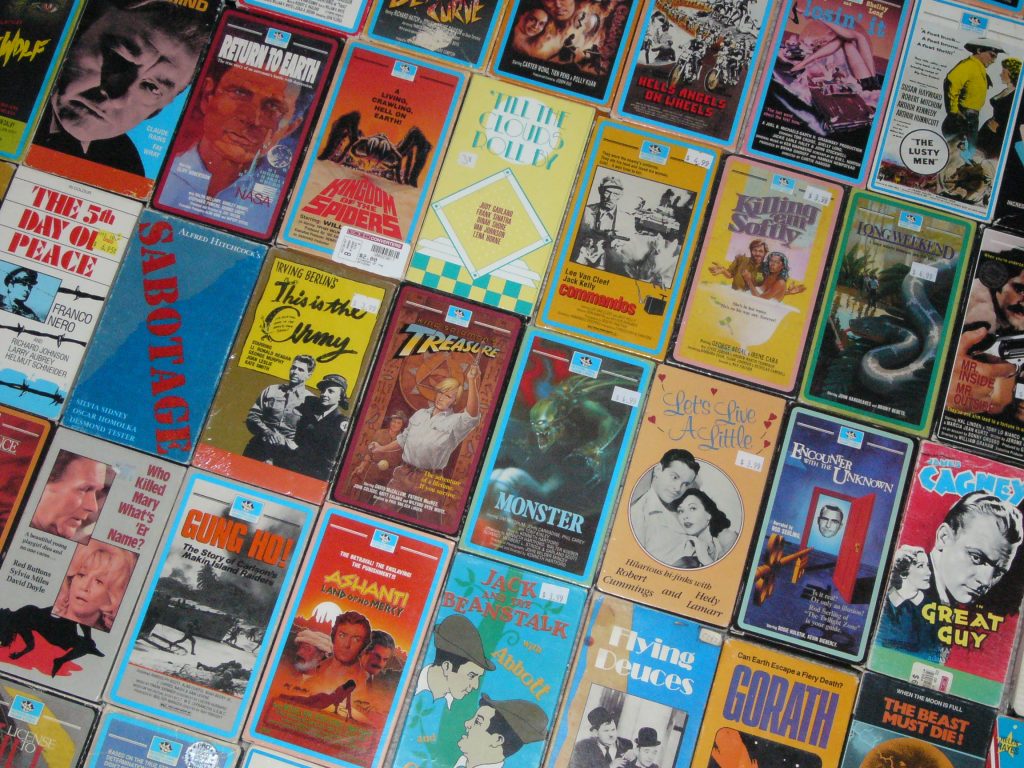
One Friday afternoon in 1985, when I sauntered into the K-Mart electronics department, right next to LPs of Songs from the Big Chair and the soundtrack to Breakin’ 2: Electric Boogaloo, was a display of pre-recorded videotapes, selling for 20 bucks a pop, and I thought the sky had fallen. Although I had yet to have a VCR in our household, I was that close to stocking up on these films that I knew I would watch again and again, when that inevitable day arrived where something flashing “12:00” would be sitting atop the TV set. Yes, among this huge, impressive display of titles, I was tantalized with the notion of being able to bring The Blob or the Lee Van Cleef western Captain Apache into my home, to watch till my heart was content.
This was the shrewd marketing ploy of Interglobal Video, offering cut-rate films for sale at cut-rate prices. The titles they offered were either public domain chestnuts, or interesting obscurities that were fairly cheap to license. They beat the majors to the punch by breaking into the consumer market, presenting pre-recorded movies for sale in a department store instead of a mail order catalogue. And even though twenty dollars for some PD staple like My Favorite Brunette may seem ludicrous by today’s standards, remember this was when a copy of Flashdance still cost $70-80. And such a revelation was this newfangled thing called the VHS, naturally people wanted to line their shelves with material to play on it.
Although I had at heart been a video junkie for about two years (having to sate my appetite in those semi-annual weekends of renting a video machine and some tapes), it was perhaps this moment in 1985 where I truly became conscious of how home video was penetrating our lives. For our generation, this was a revolution much along the lines of how the phonograph record entered consumer culture in the beginning of that century. In fact, substitute the word “music” with “movie” in the bold RCA Victor ad: “The music you want when you want it”, and one gets the idea of how powerful this notion was.
Interglobal Video was hardly the first company to start marketing films on VHS tape (even public domain titles), nor was it necessarily the first company to break into consumer level by having their product stocked in department stores. But arguably, they were the most prominent, at least in our area.
Once we did get a VCR in the home, the very first pre-record I bought was Interglobal’s Night of the Living Dead in the fall of 1986, which had cost ten bucks by then. A 50% price drop in a year! In short order, once people had seen the new market that Interglobal opened, department stores began stocking tapes from different labels. In that regard, Interglobal was the grandfather to companies like Star Classics, Goodtimes, or Front Row Entertainment (to name only a few), who would continue to sell the same batch of interchangeable public domain films well into the 1990s.
But still, of all those VHS companies that sold PD titles, perhaps none were as interesting as Interglobal. Its inventory of 150-plus titles offered a more diverse selection, cornering any conceivable market, from kiddie cartoons to kung fu, paranormal docs to made-for-TV movies, cheapo action films to bargain-basement horror, and even, light years before TV boxed sets became the rage, singular episodes of classic television (notably the final episode of The Fugitive). And since Interglobal was Canadian, they paid their patriotic respects with a handful of tax shelter chestnuts along the lines of The Clown Murders and um…. Welcome to Blood City.
In the past couple of years, VHS has had an interesting rebirth among collectors, as eBay merchants sell titles with the addendum “Not on DVD” as an enticement. In our age of company mergers, and the extremely complicated toil of finding proper copyright holders, there are still countless films awaiting the transfer to DVD, thus making an old VHS copy all the more desirable. As a result, The Witchmaker or Night of the Zombies, once distributed by Interglobal, can net high prices.
I am a fervent collector of obscure VHS tapes- partly out of my lifelong interest in little-known, obscure films (or, finding diamonds in the rough), and also with the notion to grab them while one can, as one never knows when that title will rise again. In addition, I will also unconditionally buy anything released on Interglobal or Paragon.
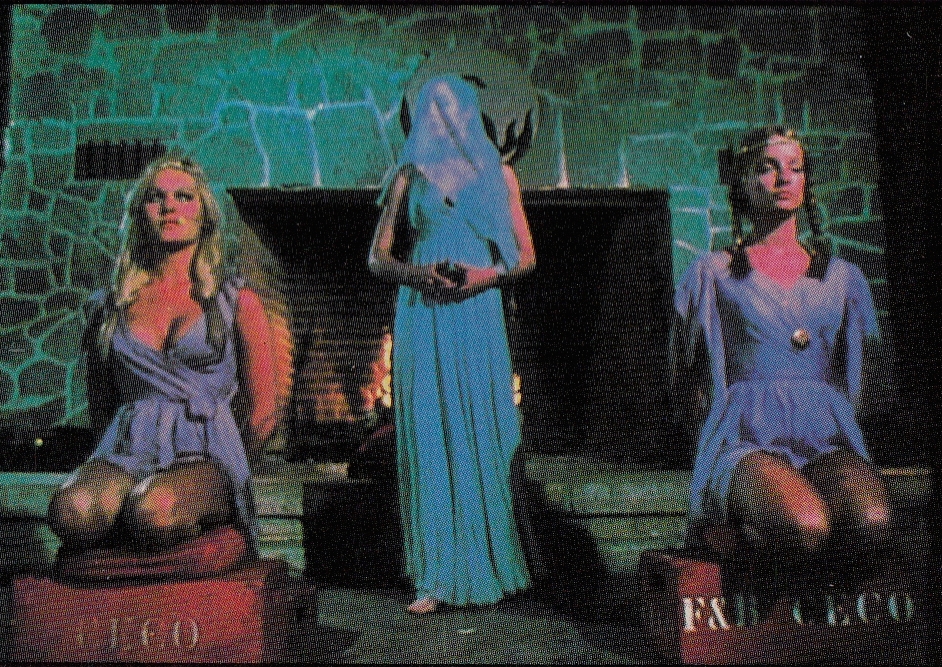
Yet if I were to explain why I collect Interglobal titles, I would perhaps attribute this to that one defining moment in 1985, and also because I am further endeared to this company because it was Canadian (first located in a Scarborough industrial park, then in downtown Toronto). The effect for me was much the same as watching a Canadian movie on television and recognizing the locations being those of our own stomping grounds. The thrill of identification comes to play, and the product thusly becomes more than just consumable material… it speaks to us intimately. In 1989, when I was in the big bad city of Toronto for a day of orientation at York University (which I would be attending that fall), I was thrilled to spot the Interglobal office as I drove by it on Spadina Avenue.

It was interesting to see this company grow within its (roughly) four-year run. When it first started, their cardboard slipcases would simply feature a monochromatic still and some fancy lettering on the front, and merely a plot synopsis on the back. And towards their twilight, the boxes were more elaborately designed, with colour photographs on the front and back. Like many of the independent video labels that would begin their films with a delightfully cheesy lo-fi computer animated graphic, Interglobal’s would preface with their trademark insignia of the planet Saturn. And during that (it seems) pivotal move to Spadina, their opening logo became more advanced, but still delightfully cheesy. Yet, the more one studies Interglobal product, the more baffling it seems.
While it became customary for public domain labels to release films in EP mode to save tape, Interglobal would strangely release material in any of the three tape speeds during its operation. (I have SP mode tapes from 1989, EPs from 1985.) Similarly, the videos would come with the erase tabs still on the tape shell, so if you didn’t like the movie, you could use the tape to record an episode of The Cosby Show afterwards. What further made Interglobal erratic is the mysterious labelling of such umbrella companies as Storytime and Saturn Productions (likely named after their own logo). (Wow- a public domain video company with mergers! Truly ahead of its time.) And why does my copy of the TV-movie License to Kill begin with a logo from the Video Gems company (who specialized in lots of low-grade drive-in fare)?
And perhaps in our nostalgic way of upholding low fidelity merchandise in light of the digital revolution (the way that people still defend the warm, yet imperfect sound of vinyl over the pristine yet hard sound of CD), the very imperfections of Interglobal are perhaps what continue to attract me all the more to its inventory. For instance, my cousin’s copy of Twisted Brain (no, sadly, I don’t have my own) has breaks in it as though it were taped from television with the commercials edited out. Some of their titles are horrible multi-generation video dubs (their releases of The Blob and Have a Good Funeral My Friend are barely watchable), but for the most part, Interglobal’s transfers often came from (let’s be charitable) well-loved 16mm prints. The colour sequences in Jack and the Beanstalk may be hard to tell from the black-and-white, The Flying Deuces is very dark, and The Terror is too hot. But watching stuff from the Interglobal collection is a lot like channel surfing at 4AM- you know, when stations used to show anything but infomercials? One never knew what they would find. In addition to the public domain perennials, the other half of their catalog remains a delightful grab bag of film history, and seeing it in a less than perfect format only heightens that feeling of the well-loved prints that would continuously circulate on the late late show.
As of this writing, I have 92 of their titles. Because I live in Canada, it is quite easy to find them in thrift stores or video clearance bins. And likely because Interglobal is considered among the cheap public domain labels that followed, they are often sold for peanuts. Oh well, their loss. In the bargain, such interesting obscurities as Where’s Willie, Sting of the West, Title Shot, Ghosts that Still Walk, and Gorath (“featuring an international cast of players!”) have found their way to my home.
I work one block from what used to be Interglobal’s Spadina office. The location became a sock factory for many years, until its recent redevelopment into condos for yuppie scum. This example of gentrification is perhaps emblematic of the whole Interglobal story. Everything in today’s climate has become so homogenized, from company mergers to the cityscape. There is little room today for individuality and uniqueness. Interglobal was all of that and more.
Originally published in Vol. #1, Issue #19 (the ever-popular VHS RIP issue). Although much of this piece has dated, I’ve decided to leave it as is, to give a picture of how the video scene was changing at the time.
Greg Woods

Greg Woods has been a film enthusiast since his teens, and began his writing "career" at the same time- prolific in capsule reviews of everything he had watched, first on index cards, then those hardcover dollar store black journals, then an old Mac IIsi. He founded The Eclectic Screening Room in 2001, as a portal to share his film love with the world, and find some like-minded enthusiasts along the way. In addition to having worked in the film industry for over two decades, he has been a co-programmer of films at Trash Palace, and a programmer/co-founder of the Toronto Film Noir Syndicate. He has also written for Broken Pencil, CU-Confidential, Micro-Film, and is currently working on his first novel. His secret desire is for someone to interview him for a podcast or a DVD extra.