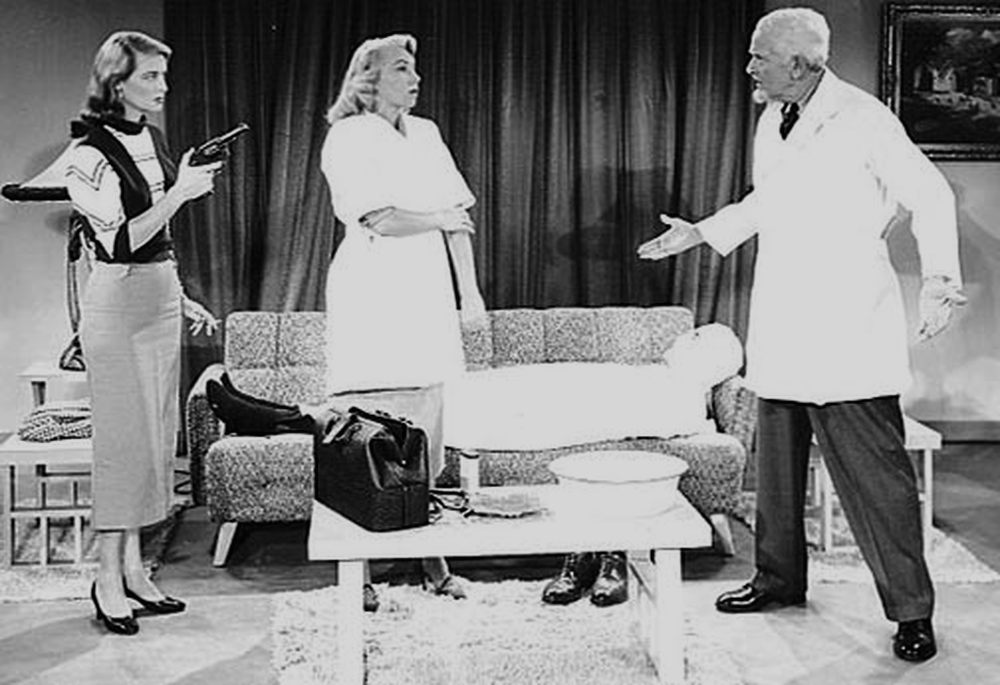
Jail Bait (USA, 1954) 70 min B&W DIR-PROD: Edward D. Wood Jr. SCR: Alex Gordon, Edward D. Wood Jr. MUSIC: Hoyt Curtin. DOP: William C. Thompson. CAST: Lyle Talbot, Dolores Fuller, Herbert Rawlinson, Steve Reeves, Clancy Malone, Timothy Farrell, Bud Osborne, Conrad Brooks. (Howco)
Jail Bait was Edward D. Wood Jr.’s second feature, following the truly bizarre, semi-autobiographical exploitation film Glen Or Glenda? The notorious director, now famous for his string of hilariously inept, no-budget oddball genre films of the 50s (including cult classics Bride of the Monster and Plan 9 from Outer Space), tried his hand at a crime film with Jail Bait (aka The Hidden Face). The resulting film, apparently inspired by the popular police procedural television show Dragnet, is a murky, low-budget descent into film noir, perhaps Wood’s most conventional effort, although not necessarily his most entertaining.
Co-scripted with Alex Gordon, produced and directed by Wood, and featuring a hodgepodge cast typical of Wood’s films (Lyle Talbot, Dolores Fuller, veteran actor Herbert Rawlinson), Jail Bait tells a story right out of a lurid dime-store paperback of the era. Don Gregor (Clancy Malone) is the restless, trouble-seeking son of a well-respected surgeon (Herbert Rawlinson), who has, to his father’s disappointment, thrown in with petty gangster Vic Brady (Timothy Farrell), looking for kicks. After being bailed out of jail by his sister (Wood regular and then-girlfriend Dolores Fuller) for carrying a gun (the “jail bait” of the title), young Gregor is coerced by Brady into holding up a theatre chain for their payroll money. The heist goes predictably wrong, and Brady and Gregor end up shooting a security guard and the theatre’s secretary. Police Inspector Johns (Lyle Talbot) and Lieutenant Lawrence (Steve Reeves of Hercules fame, in his first speaking role) are hot on the trail, and Gregor eventually confronts Brady in an effort to turn himself in, consumed by confusion and guilt. Brady mercilessly kills Gregor, and then demands that Dr. Gregor perform plastic surgery on his face to hide his identity, so that he might evade the law. The story climaxes with a twist, as Brady’s bandages are removed, and a final shootout with the police ends the film on a grim note.
Jail Bait is often referred to as a bottom of the barrel film noir thriller, probably more by association with other like-minded films of the day than a result of Wood’s vision or technical achievements. The film does exhibit several traits typical in noir: it is a pessimistic crime film of the noir era, filmed largely in nocturnal settings (often on location), with a lead character caught in a downward spiral that he can’t escape, and both his unsympathetic cohort and the cynical forces of the law closing in on him until he meets his doom at the end of a gun. With Wood’s shoestring $21,000 budget, considerations like lighting, set design, scripting, and acting are kept to their absolute bare bones, and it shows, although the film does exhibit a strange, foreboding atmosphere, and some good convoluted dialogue in true Wood fashion. Timothy Farrell’s performance is among the highlights of the film; his Vic Brady is an unlikable, self-serving seedy gangster who spends part of the film walking around with his head bandaged up like the invisible man, toting a handgun for extra menace. The unsettling music in Jail Bait, an ominous mixture of sharp piano and agitated flamenco guitar strumming, is actually lifted from another film, Mesa of Lost Women, providing an odd, tense soundtrack that is often at odds with the action of the film. Jail Bait is not essential by any means, but a must for Wood fans, and Z-grade crime and exploitation film aficionados.
As a point of interest, the Rhino video version of this film is billed as the “director’s cut”, and claims to feature “lost footage”, which amounts to a 2 1/2 minute burlesque striptease scene spliced into the film. This scene effectively replaces a Cotton Watts blackface comedy routine that was spliced into the film at the same point in other versions that I’ve seen. Who says Ed wasn’t post-modern?
Originally published in Vol. #1, Issue #13 (“Noir”).
David Faris

David S. Faris is a Toronto-based writer, musician, DJ, and graphic designer. He has written articles and reviews for music magazines Chart, Exclaim!, and Blue Suede News. He is also a founding member of the Toronto Film Noir Syndicate.