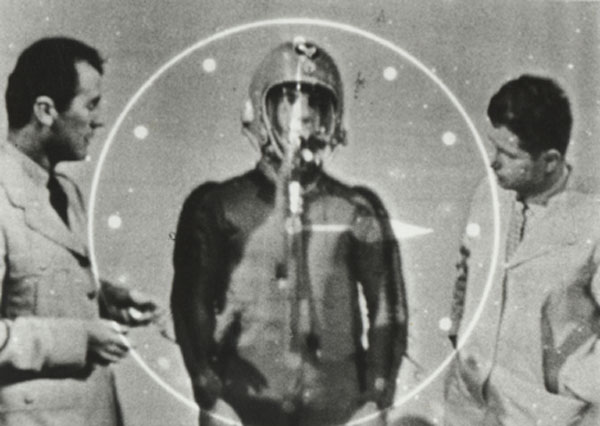
In recent times, the culture industry has really started to look back to recycle just about any film that hasn’t yet been remade and re-shoot the damn thing, making something that often lacks the substance and merit of its original. In a culture that lacks much in the way of original material being produced, I find there is no small amount of irony in the fact that much of the best work being produced in contemporary moving picture culture is the work being produced around the artistic practice of plunder.
Plunder? As in piracy? Well sort of. In this context plunder as a practice is simply the gleaning of other visual and auditory material and re-contextualizing it to create a new work out of the old. And with the major market push to create obsolete forms of media every 10 years, there is much to be plundered from our past- film prints, analog tapes etc. In many cases, plunder functions to bring new life to otherwise forgotten media, to create new narratives and mythologies from the old, to critique both our contemporary media culture and the culture(s) that came before it. Now when I say plunder, I also mean “found footage”. Often these terms are interchangeable.
Found footage work has enjoyed a history almost as old as commercial cinema. And along the way there have been many great film artists that have worked almost exclusively with this form of creative expression. Here in Canada we have the wonderful Arthur Lipsett, who in spite of a troubled life managed to raid the bins at the NFB to create some fantastic avant-garde films. And that is pretty typical when you look back at found footage and plundered work- much of it falls under the auspices of experimental cinema, and it very much is. It is difficult to find so-called narratives wrapped in a found footage package. There are a few though, who manage to create incredible narratives woven from (almost) entirely found material.
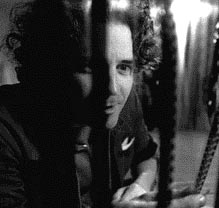
In particular, I speak of San Francisco filmmaker Craig Baldwin, whose entire body of work embodies the practice of plunder. His very first film was a work composed entirely of found footage: Wild Gunman (1978; 20 min) juxtaposed images of cowboy iconography with those of military conflicts to critique American Cultural Imperialism. His second film, Rocket Congo Kit (1986; 30 min) held a similar practice, but this time Baldwin traces the history of Zaire since its independence, its connection to the CIA and German munitions manufacturers. There were eight years between the releases of these two films, and having seen much of his work, I have to admit that his films are products of a meticulous sense of craft. They are finely tuned, frenetically paced, and saturated with more information than any other films I have ever seen. The interesting part is deciphering the fact from the fiction. Often because of his use of images from both the “real” world, they meld together so seamlessly that it can be difficult to tell which is which at times.
Baldwin released his first documentary, its theme revolving around other artists who use found material in their work. The film Sonic Outlaws (1995; 80 min), featured profiles on the Barbie Liberation Organization (who were responsible for switching the voice boxes in GI Joe and Barbie dolls, and putting them back on store shelves (they called it gender jamming), Negativland (audio plunder artists extraordinaire) and the Emergency Broadcast Network (media culture jammers).
In all his work, Baldwin really seems to commit himself to the politics of plunder, of independent media, and of resistance. In an interview with Channel Zero videozine (the creators of which went on to found the Guerrilla News Network), Baldwin calls himself a media archeologist, taking from culture, and giving back to it. Even though the interview is a few years old, Baldwin speaks of combating against commodity-based media culture, the corporate control of technology, the power of the corporate lobby, and of the power of a grass roots media movement (some are now calling this Electronic Folk). His work with found footage is the most astounding work I have ever seen. Feature filmmakers have a tough time with continuity sometimes, and yet somehow, Baldwin manages to create a sense of that continuity using footage from a multitude of different sources.
Baldwin’s passion for the more esoteric forms of cinema can be seen on his website, (www.othercinema.com) which is divided into his cinema (along with that, OtherZine, an experimental film/ media zine can be found there), and his DVD line, Other Cinema Digital (named for the cinema Baldwin operates in San Francisco which runs screenings every Saturday night) which distributes some great collections of horror, burlesque film, and more, in addition to his own work. Since the first moment I saw Tribulation 99, I have to admit that often I tout Baldwin as one of my favourite filmmakers, someone worthy of far greater attention than he receives at least. Anyone who spends that much time with each film, crafting and re-crafting, is someone who proves his dedication to his work, and to the politics it. All of his films deal with American Imperialism, whether it is through military or cultural means. Baldwin is a key combatant in the war on American Ideology.
Tribulation 99
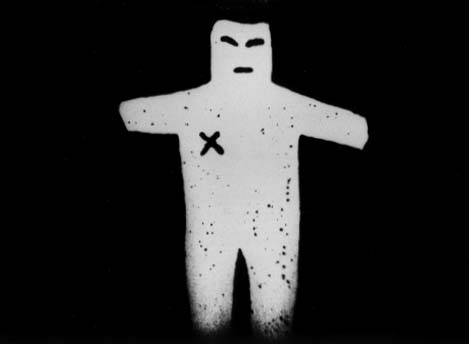

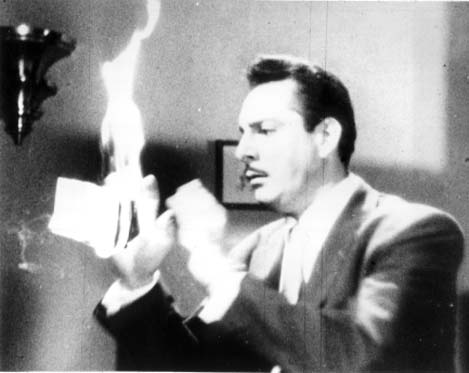
Anything that I have to say about Craig Baldwin stems from the first time I ever experienced one of his films. It was at an experimental sci-fi screening series in Museum London (Ontario) and was curated by David Clark (director of the Canadian avant-sci-fi film Maxwell’s Demon). I saw a lot of great films that night, but nothing came even close to Baldwin’s Tribulation 99: Alien Anomolies Under America (1991; 48 min). Imagine a film that consists of 99 interrelated conspiracy theories (some based on fact, some fiction) that detail the coming of the apocalypse, and tracing back to pre-history. All within 48 minutes, which simplified means about 30 seconds for each one. And you would not believe the amount of information contained in 30 seconds of the film.
The film focuses on the presence of alien influence in Latin America, and the US’s secret war against them. We are first privy to the aliens’ arrival through a slew of images that contain sci-fi features (such as This Island Earth, and The Mole Men), educational and industrial films, newsreels etc. The Quetzels flee their home world, and find a new home in the centre of the earth. From there they begin to influence man in Latin America, through their manipulations with the populace dating back to the times of ancient temple builders. The story unfolds from here- rapidly edited segments, each one separated by an optically printed inter-title featuring the theory’s number (1-99) and a title providing a brief description of it. The whole film is narrated by Sean Kilkoyne, who plays the pirate DJ Yogi, in Baldwin’s Spectres of the Spectrum (1999; 94 min); his raspy, almost whispering voice gives the impression that he is whispering all these secrets to you in some kind of clandestine meeting. It’s incredibly effective.
The Quetzels being an underground race, are awakened and angered by US cold war underground nuclear testing, and begin to strike back. Using footage from so many sources, the film embodies the idea of alternate history, the secret history no one is aware of- it is of course a work of fiction, but the story that’s woven seems so resolved, so matter of fact that you can’t help but get swept up in it. You are almost convinced that the reason the US could not assassinate Castro during Operation Mongoose, was because the Q’s had replaced him with an android. Oswald was one of their operatives as well. The war is waged in secret though, between the Q’s and the CIA, only popping onto the world’s radar in conflicts such as the Grenada confrontation (which was the result of creating a Psychic Vampire regime there).
It is a really tough film to articulate; it is far more experiential than anything I’ve seen, meaning that my memory of it is hazy at the best of times, with minor pieces of information sort of popping up now and then.
Spectres of the Spectrum

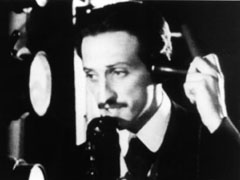
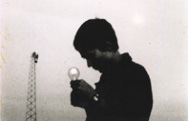
In some odd way, Spectres feels like a sequel, or the description of some tangential universe related to Tribulations. Perhaps it is the presence of Sean Kilkoyne as narrator once more. The story of Spectres begins in our future, after the government (or NEMO- the New Electromagnetic Order) has created an electromagnetic field that has polluted the earth, and turned many of its populace into mindless zombies. And a new global system is planned to go online within days. Yogi (the half psychic proprietor of TV Tesla, a pirate TV program working to expose the government’s evil plots) and his daughter BooBoo (a full blown psychic who can hear the sounds of the wide range of the electromagnetic spectrum) live in an air stream trailer on an old military (nuclear) test site due to the radiation’s ability to mask their broadcast position. They spend their evenings locked in their trailer eating military food rations, safe from the roving zombies. To drown out the noise, old bootlegs of East Indian Organ Player’s The Korla Pandit show. Their trailer is chocked full of electro-gizmos, players and broadcast gear, all crammed with a tiny living space. BooBoo tells us of her grandmother Amy Hacker, who did radar/electromagnetic research for RCA (her exposure to radar waves being the reason for Yogi and BooBoo’s psychic prowess). In her dying words, Amy Hacker gave BooBoo a cryptic message. “Eclipse, then wormhole back to ’57, in science in action, is the message in the bottle”.
We learn that Miss Hacker was on a television science show from the 50s called A Science in Action. We are shown clips of it. Then we are privy to Yogi’s broadcasts, in which he includes small broadcasts from others who wage pirate-broadcasting war. Eric Davis Media Archeologist, Phil Pateris, aka Capt Midnight, whose video cuts ups are renown, and Jesse Drew, computer hacker and cross border labour organizer. These three men lend their areas of knowledge in league with Yogi. Now throughout the story we learn that the only way to stop NEMO’s new system from coming online is by having BooBoo travel back in time to 1957 to decipher Amy Hacker’s message and thus save the world.
But even while we are being fed all of this information, we are also given Yogi and BooBoo’s history of culture jamming, the history of electromagnetic and broadcasting history, from Franklin to the present. So not only are we getting a very interesting sort of avant-sci-fi tale, but we are also witnessing a well crafted documentary chronicling the history of broadcasting technology, paying particular attention to the pioneers (Nikola Tesla, Thomas Edison, Marconi, and Philo T. Farnsworth- the inventor of television). Now throughout this interwoven history, we come to realize that the history of the technology is the history of corporate society’s domination of media. Broadcast history is the history of corporate western media. GE begat RCA, which begat NBC. We bear witness to the independent’s getting squeezed out, all to create a commodity based media culture.
BooBoo then travels in time back to the past using the air stream trailer, which has been converted into a Chrono-Craft. She figures out the mystery, and thus is able to destroy NEMO’s new array of electromagnetic domination technology. The time traveling sequences are incredible. Using camp imagery (a model of an air stream trailer in front of rear projected images of space- you can still see the strings that hold the trailer aloft in the shots), and some great time-lapse shots, this is some of the most interesting of the footage that was shot for the film. And to my knowledge it is the first time Baldwin uses footage he has shot himself in one of his fiction film pieces. It’s a brilliant melding of both shot footage and found material to create this world.
Originally published in Vol. #1, Issue #20, “Independent Voices”.
Skot Deeming

Skot Deeming is a pop culture commentator and enthusiast, who has written about media and culture in various fields; including film, television, new media art, video games and art toys. His artwork has been exhibited internationally and his writing has appeared in academic, mainstream and independent publications. Currently, he’s living in Montreal, working on his PhD centered on the cultural economies of character licensing, appropriation art, and toy cultures. Find him at: Instagram (@yoyodynetoydivision)