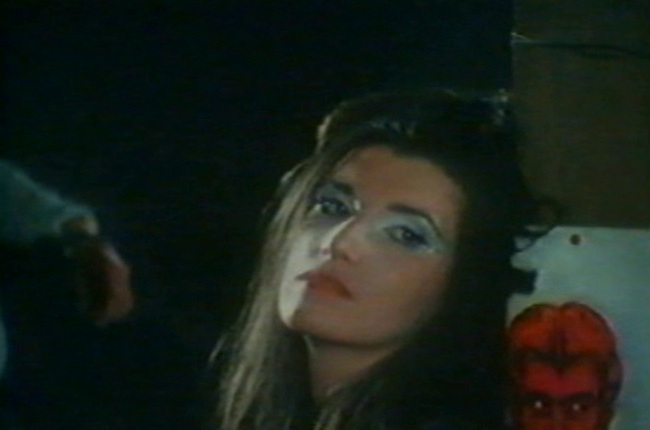
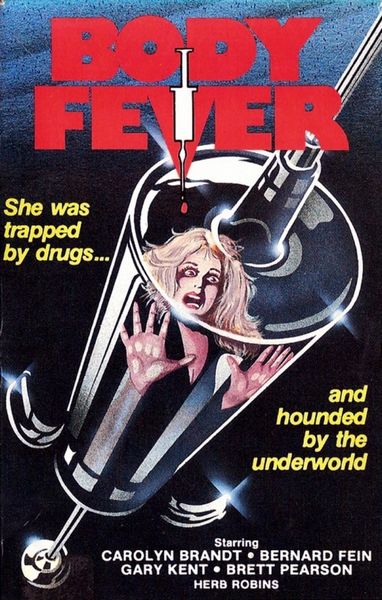
Body Fever (USA, 1969) 78 min color DIR: Ray Dennis Steckler. SCR: William Edgar, Ray Dennis Steckler. PROD: Ray Dennis Steckler, Keith A. Wester. MUSIC: “Henri Price” (aka- André Brummer). DOP: Keith A. Wester, Jack Cooperman. CAST: Ray Dennis Steckler, Carolyn Brandt, Bernard Fein, Gary Kent, Herb Robins, Coleman Francis, Brett Pearson, Ron Haydock, Joseph Bardo, Liz Renay, Laura Steckler, Linda Steckler.
In Godard’s French New Wave classic Breathless, Jean-Paul Belmondo views a poster of Humphrey Bogart in The Harder They Fall, displayed in a movie marquee, and attempts to emulate the body language of his favourite actor. Body Fever pays homage to that classic scene, as Ray Dennis Steckler views a poster of Bogart’s classic High Sierra in a marquee. We see Steckler’s face reflected in the glass over the poster, pursing his lips much like Belmondo did. In other words, Steckler is channeling Belmondo who was channeling Bogart. As in the French New Wave, Steckler’s films are improvisatory in tone, if out of necessity. This visual wink to Godard comes at a time when cinephilia was on high. Steckler’s films are scruffy valentines to B-movies of yore. The circle is complete.
Like Belmondo, Steckler is an unusual onscreen presence, all the more convincing for a role as an unconventional detective. Steckler’s PI Charles Smith, in his goofy fishing hat, is so down and out that he needs to hitchhike to get around, as his car has been repossessed. (This predates David Janssen’s TV detective Harry Orwell, who always took the bus.)
The film opens with Steckler’s fetching wife, Carolyn Brandt dressed in a silly Woolworth’s Halloween costume, as cat burglar Carrie Erskine, who steals a stash of dope from a safe, and then in turn gets robbed by Frankie Roberts, played by Thrill Killers bad guy Gary Kent. Once crime boss Big Mac (Bernard Fein, from The Phil Silvers Show, winning this film’s overacting award) learns of the robbery, he goes berserk, knocking over a card table in his wood paneled rec room, and spews out orders to his henchmen to capture Carrie in three days, or else.
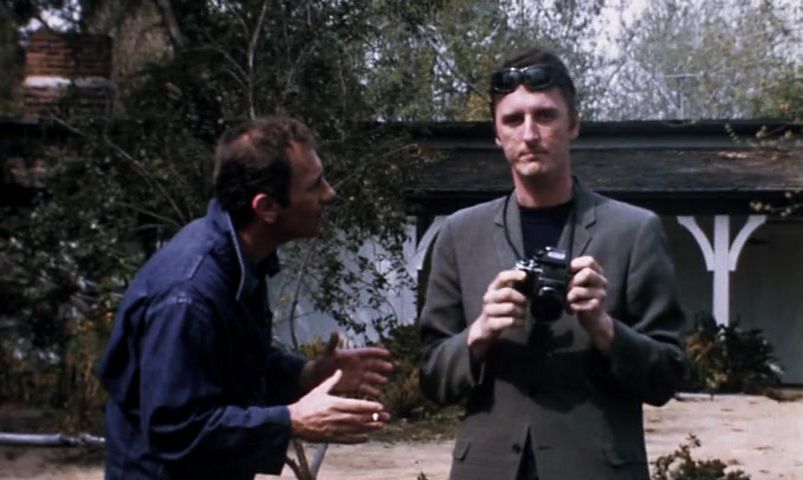
Detective Charles Smith’s planned weekend on his boat is interrupted once he’s hired by a man named Fergeson (Alan Smith) to find Carrie in three days. He is given two grand up front, plus a list of possible contacts that Carrie knew. Smith goes through a veritable B-movie assembly line of quirky characters, like the foreign photographer Fritz (Rat Phink star Ron Haydock!), a guy named Moose, wild go-go chick Judy (Pat Jackson) and former roommate Carol Hollister (Brett Zeller), who gets fed heroin from Frankie. Look fast for a cameo by his Thrill Killers co-star Liz Renay at the psychedelic night club, where Smith first encounters Frankie.
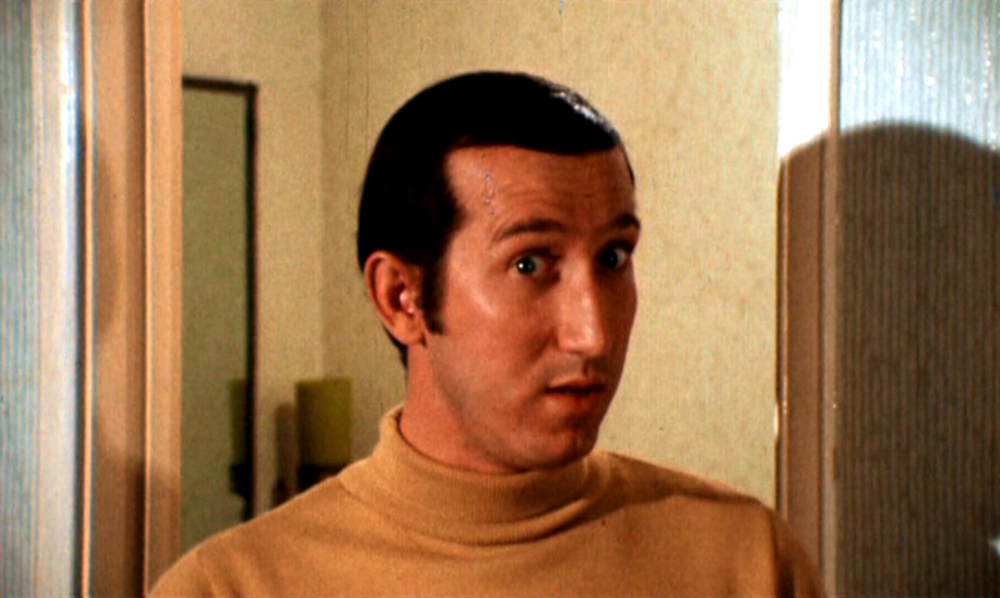
This homage to film noir is, typically of Steckler, a mixed bag of tones, where one childlike scene scored by a rinky dink organ is followed by an unpleasant moment of drug use and violence. The loose plot seems that it can wheeze out at any moment- once Smith’s case leads take him back to zero, he resorts to a psychic for help!
Eventually, Smith meets Carrie, and they swipe the dope from Frankie that she originally took from Big Mac. Frankie tracks them down- a fight breaks out in a quarry, and suddenly Frankie is shot dead by an unknown assailant. Once again, Steckler turns his movie on a dime. Smith ends up in bed with Carolyn Brandt for a full day until his clothes are dry-cleaned! What will he do in the meantime? There is a lovemaking scene, concluding with a shot of Ms. Brandt’s face illuminated with a red gel. Carolyn Brandt has an orgasm!
Steckler still makes a personal movie by including his daughters in one telling moment where Smith views chalk drawings being washed off of a driveway blacktop, and in using his own house for several scenes. (He used his basement for the psychedelic club sequence, and most amusingly, used his second floor hallway for the office building interior, with suite numbers glued onto the bedroom doors!)
Steckler’s improvisatory nature is best seen in perhaps this film’s most famous production story, the last-minute hiring of actor-director Coleman Francis, previously seen in Lemon Grove Kids. On the night that principal photography wrapped, Steckler then noticed his old friend on skid row. Right then, he decided to add a few scenes with Francis as Coley, manager of a closed-down laundromat. These moments give weight to the plot, and some unexpected poignancy, as Francis more or less plays himself down on his luck. And yet, Coley is the one loyal guy in the entire movie! Smith leaves the bag of dope with him while solving more of the case. When flunky Herb asks Coley what’s in the bag, he replies he doesn’t know. Herb had been selling dope skimmed from Frankie, and now he too is after this elusive bag of heroin. He snatches the bag from Smith later in the movie. Smith gets the bag back after a chase, and then goes back to Carrie’s place and Carol is there. She shoots him after he and Smith tussle- thus we learn that she had also shot Frankie earlier.
Meanwhile, Big Mac is getting pressed by his contact Sam to deliver the missing bag of junk. He doesn’t have it, but he explains he knows who does: “Ever see any of those Bowery Boys movies? The guy who played the dummy klutz?” This line is a clever aside to Steckler’s character, because in his previous Lemon Grove Kids movies, the maverick actor-director had done a spot-on imitation of Huntz Hall.
Big Mac squares off with Smith and Carrie. The detective pours all of the powder down the toilet, and Big Mac is left, laughing uncontrollably, as his own fate is now sealed, because he can’t deliver for his man Sam. The final shot of this scene features the half-mad Big Mac through a distorted glass, at once recalling a similarly overlong shot in Killers Kiss (another beatnik noir movie), and the house of mirrors in Lady from Shanghai. After this, the picture ends where any Steckler film should… back in bed with Carolyn Brandt.
Although the plot is nothing special, it is actually more coherent than most of Steckler’s films, even if it is merely vignettes of Smith’s encounters with sordid characters, or the bag of dope passing between different owners. For such a bargain basement genre picture, Body Fever understands the psychology of its sordid characters, especially Coley’s. They are all just hanging on, desperately attaching to anything, no matter how wrong, in order to get ahead. One of the most telling moments is, of all places, the final credits sequence, featuring fragments of the film with snippets of down-and-out inner city locations. There is a correlation between the desperate characters and the desperate people trying to make this movie: more than a choice—it is a fact of life.
Body Fever was also released with alternate titles Super Cool, and The Last Original B-Movie, which is perhaps more succinct, especially in view of Steckler’s subsequent career. It does feel like a “last movie” of sorts, as the bridge between his joyous work of the 1960s and the miserable, ugly “adult films” of the next decade. As such, there is a profound sadness to this picture: as he is saying goodbye to that endless summer of superheroes, movie monsters and Bowery Boys. Hollywood would be making entertainments full of old movie nostalgia in a period when Steckler’s films would have none.
Edited from a review in Vol. #1, Issue #13 (“Noir”).
Greg Woods

Greg Woods has been a film enthusiast since his teens, and began his writing "career" at the same time- prolific in capsule reviews of everything he had watched, first on index cards, then those hardcover dollar store black journals, then an old Mac IIsi. He founded The Eclectic Screening Room in 2001, as a portal to share his film love with the world, and find some like-minded enthusiasts along the way. In addition to having worked in the film industry for over two decades, he has been a co-programmer of films at Trash Palace, and a programmer/co-founder of the Toronto Film Noir Syndicate. He has also written for Broken Pencil, CU-Confidential, Micro-Film, and is currently working on his first novel. His secret desire is for someone to interview him for a podcast or a DVD extra.