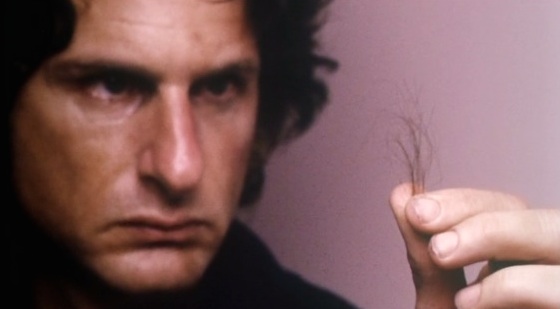
Blue Sunshine (USA, 1977) 94 min color DIR-SCR: Jeff Lieberman. PROD: George Manasse. MUSIC: Charles Gross. DOP: Don Knight. CAST: Zalman King, Deborah Winters, Mark Goddard, Robert Walden, Charles Siebert, Ann Cooper, Ray Young, Alice Ghostley, Stefan Gierasch, Richard Crystal, Bill Adler, Brion James. (Synapse Films)
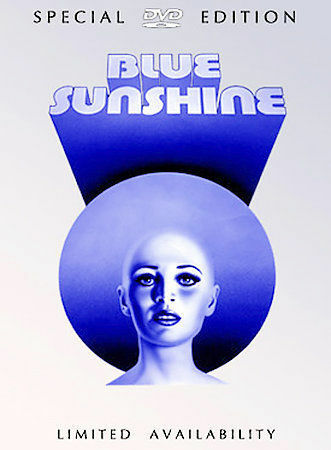
Ever since I began this publication I have wanted to write about Blue Sunshine. There has never been a more perfect time, now that it has been released to DVD by Synapse Films in a limited edition, double-disc set, which is a must-have for fans of the film, presented in its original wide-screen ratio (mastered from the only surviving 35mm print), still retaining the nice colour previously seen in the good old Vestron VHS release. The extras include a feature-length commentary by writer-director Jeff Lieberman, his 1972 short film The Ringer, a Blue Sunshine trailer, and a bonus CD with Charles Gross’ soundtrack. This is a perfect movie for The Eclectic Screening Room: a film not many know, but those that have seen it usually think very highly of it. If you’ve never seen this truly unique film, then hopefully this will intrigue you enough to seek it out.
Jeff Lieberman’s filmography may seem like a footnote in the history of the horror genre in comparison to those of his contemporaries, but his humble, intelligent, visually innovative, slyly funny work warrants attention. Lieberman began his directing career with the award-winning 1972 short film, The Ringer (included on the DVD): a vicious satire on consumerism masquerading as a cautionary tale on drugs. This 20-minute film already demonstrates his skill as a writer and a director. With inventive visual ideas, and an unusually ambitious screenplay for such a small work (he effortlessly weaves several story threads in its scant running time), it is clear that this young man was meant to go places. Indeed, his knack for writing was already singled out by his NYU professor, director Ernest Pintoff. The two men co-authored the screenplay for Pintoff’s 1973 crime thriller Blade (which Lieberman hated, but is actually pretty good).
After holding a day job at Janus Films, Lieberman managed to afford some time off to write the screenplay for Squirm (1976), which he was also allowed to direct strictly on the strength of his script. AIP picked up this likeable horror film which featured worms going on the rampage once they are zapped by a felled wire during a storm. This hit film, part of the decade’s “nature run amuck” trend in horror films, is best remembered today for its early makeup effects by a young Rick Baker (soon to win an Oscar for An American Werewolf in London). But seen in context with Lieberman’s other works like Blue Sunshine and Remote Control, this could be read as a subtle update-homage of 1950s “giant bug movies”. As much as the big monsters, flying saucers and blobs of that bygone era can be campy and outrageous, the horror in all of Lieberman actually seems plausible. Perhaps this is why his mannered films are more terrifying.
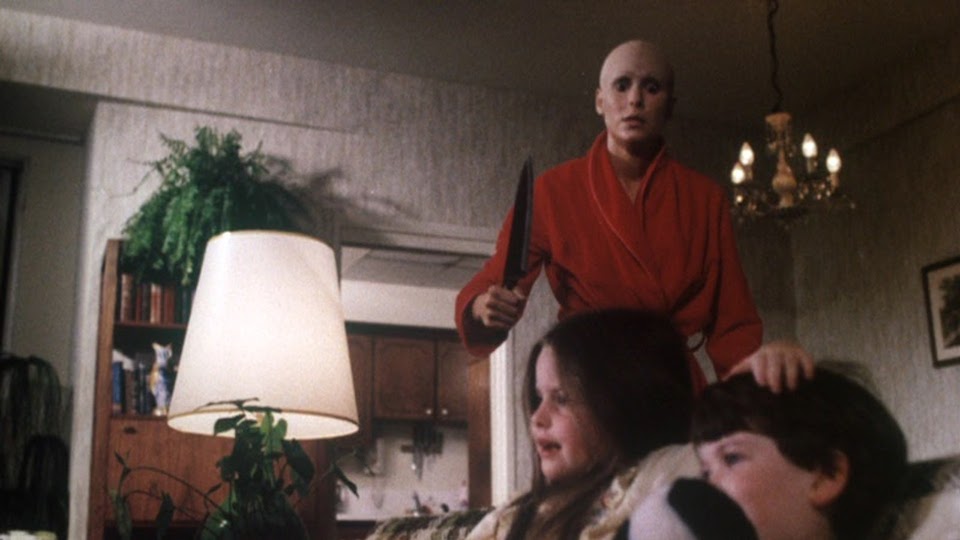
His follow-up picture, Blue Sunshine, is certainly scary (no one forgets the scene where the babysitter flips out), but it is equally funny, and original- even while working within accepted horror formulae. Updating Invasion of the Body Snatchers to the “Me” generation, and for that matter, anticipating the popularity of David Cronenberg’s “epidemic films” (Rabid; Scanners), “Blue Sunshine” refers to a strain of LSD which was taken by Stanford University students in the 1960s. Ten years later, these people experience flashbacks of the deadliest kind– first their hair falls out (we learn that the term is “Alapecia Totalis”), and then they become homicidal zombie-like maniacs! Zalman King plays Jerry Zipkin, a perpetual loser (his name can be read as: “zip”, “zero”) who becomes implicated in the murders committed by a friend at the party who had become “one of them”, and eludes the authorities while he investigates similar bizarre killings throughout the city.
This film was initially planned as a $3 million project, yet due to the untimely death of his father, Jeff Lieberman was anxious to get back to work, and therefore production began with just the $500,000 they had on hand. To accommodate the reduced budget, the film was drastically re-written. Whole subplots were thrown away (including all of the scenes featuring the would-be “Blue Sunshine” recipients at college in the 1960s), and most tellingly, the setting of Blue Sunshine moved from Lieberman’s native New York to sunny California. This was an unfortunate, yet serendipitous move. The original screenplay was reliant upon the New York transit system to aid Jerry Zipkin in dodging the police and investigating the strange motivated by “Blue Sunshine”, and to secretly rendezvous with his girlfriend Alicia Sweeney, who helps dig up some clues in his detective work. (The tie-in movie paperback is actually closer to the original treatment than the finished product.) To be certain, the abbreviated screenplay of Blue Sunshine does appear hackneyed in those very spots. Instead of New York’s subway system, Jerry is now running around LA in a Bronco truck– and he seems able to meet Alicia at certain points with great ease (this was made before cellular phones). But for these moments, Blue Sunshine nonetheless remains a literate, intricate piece of work.
First, there are those marvellous opening scenes. We first meet Dr. Blume (played by Robert Walden, best remembered for TV’s Lou Grant), checking on a terminally ill patient. Suddenly, we cut to a close-up of his eyes as he has another of his strange headaches. Then, we look in on Wendy Flemming (Ann Cooper), who is babysitting her friend’s two kids. Her ex-husband Ed Flemming appears on TV in an ad for his congress campaign. Wendy is reading “Rapunzel” to the kids (cute), and the little girl acts out the story, managing to dislodge a huge strand of Wendy’s hair! Cut to a generic suburban home. Richie Grosso is having coffee in the kitchen of his neighbour, Barbara O’Malley, who complains of her husband John’s strange behaviour. Suddenly, John appears in the doorway, and Richie sheepishly leaves. Cut to a close-up of John’s eyes. In a device worthy of Altman, these moments are unified with an interesting device. Each segment ends with a pan upwards, fading into a pan up and down a full moon, fading into pan down into the first image of the next scene. The full moon is meant as one of the film’s many tongue-in-cheek visual puns about baldness, but it alludes to much more than that. The full moon is an archetype which harkens back to the days of The Wolf Man— it is indicative of the dark side of human nature, which will soon be revealed.
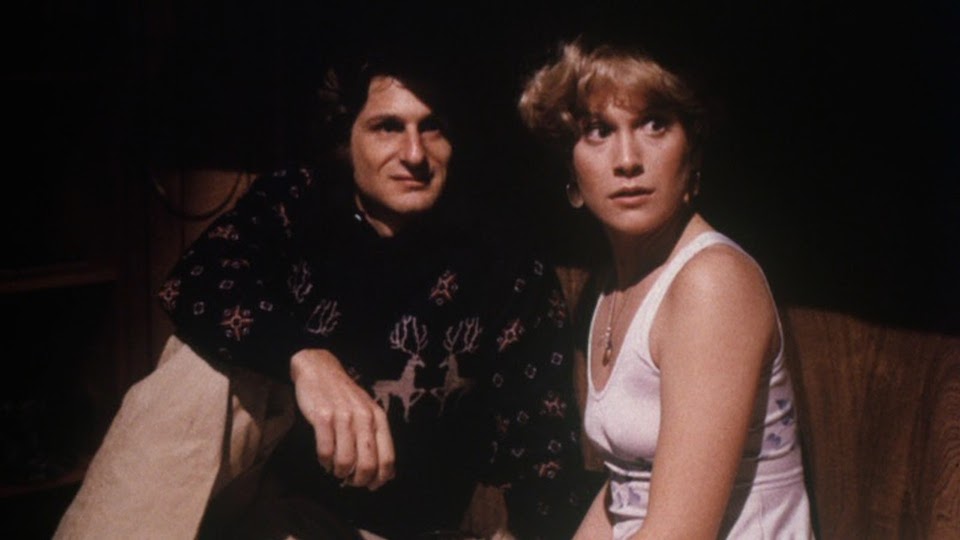
Finally, we witness a house party which Jerry and Alicia attend. Frannie Scott (played by Richard Crystal, brother of Billy) suddenly loses his hair, freaks out and leaves. People go outside and look for him. Meanwhile he returns to the party and kills three women. Jerry returns and witnesses the gruesome murders, and then Frannie tries to kill him. In a struggle which continues outdoors, Jerry pushes Frannie in front of a truck. Zipkin is thus implicated in the murders of the three women and Frannie’s death. Detective Clay (played by Charles Siebert) follows Jerry into the city, as Zipkin tries to unravel the mystery behind this incident and other similar crimes which occur. John O’Malley (seen in the opening) is on a newspaper front page after committing a murder-suicide. And in probably the film’s most remembered scene, Wendy Flemming turns into one of the homicidal maniacs while babysitting the kids! (The cross-cutting between Wendy’s psychotic tendencies and Jerry arriving to the rescue and, eventually, another murder implication, is terrific.) The trail of this bizarre murder puzzle leads him to a drug connection with Stanford University alumni: the manufacturing and selling of “Blue Sunshine” involves Jerry’s friend Dr. Blume, as well as congressman-to-be Ed Flemming (played with gravelly used-car salesman slime by Mark Goddard).
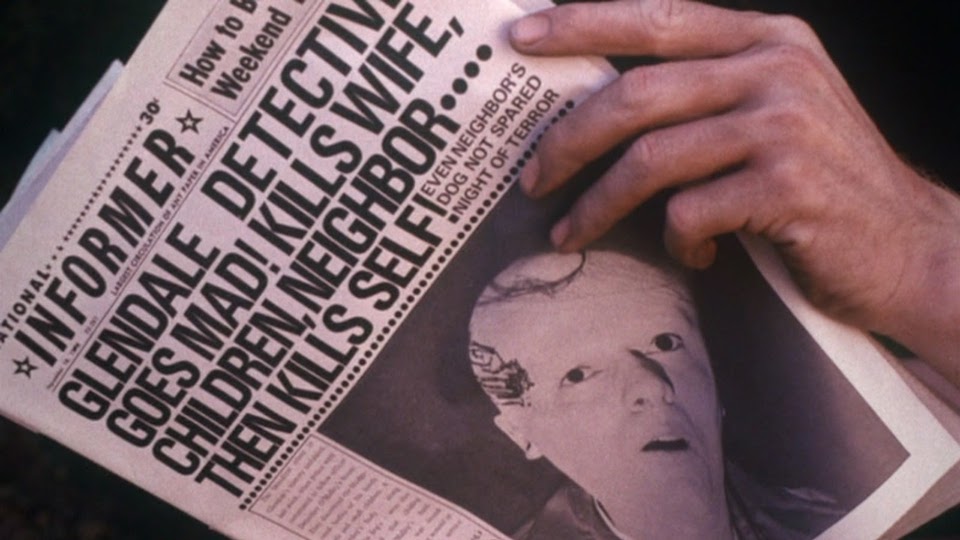
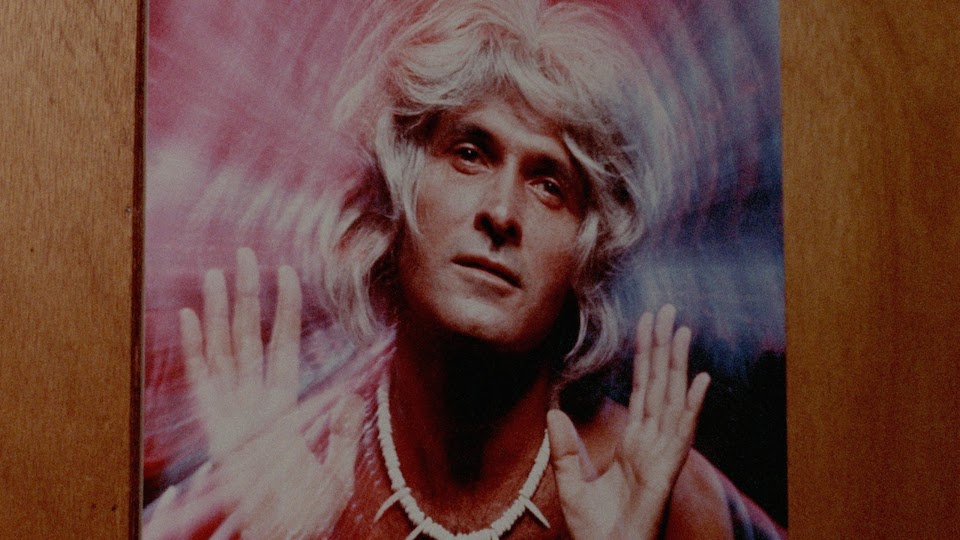
The move to make Blue Sunshine in California is actually advantageous, for the film becomes a valuable portrait of So-Cal boomers who had cut their hair, settled down in their groovy apartments, wore flashy bell-bottoms and discussed new age popcorn by way of Cosmopolitan magazine. Blue Sunshine is set in post-Watergate America, when Uncle Sam was giving the finger to the public (as evidenced by a photograph hanging in Frannie’s studio), hedonism is just beginning to take charge thanks to this new music called disco, and divorce is on high, yet still not as traumatic as The Beatles breaking up (to paraphrase a line uttered by one of the characters). The decision to put a skeleton into the closet of a politician is not a surprising device today, but at the time, this was a very brave idea.
Lieberman’s horror films remain plausible, because the people in his films are characters instead of caricatures (look at how much development he gives to these characters in the brief opening sequences!), yet the fantastic moments seem logical in the worlds he creates. Because Blue Sunshine is set during an age of disillusionment and alienation, it only seems natural that the bald killers in the movie are just as dehumanized as the society in which they dwell. Further, although the term “blue sunshine” is fictitious, it does sound suspiciously like real-life terms given to LSD: “Blue Cheer”, “Owsley Purple”.
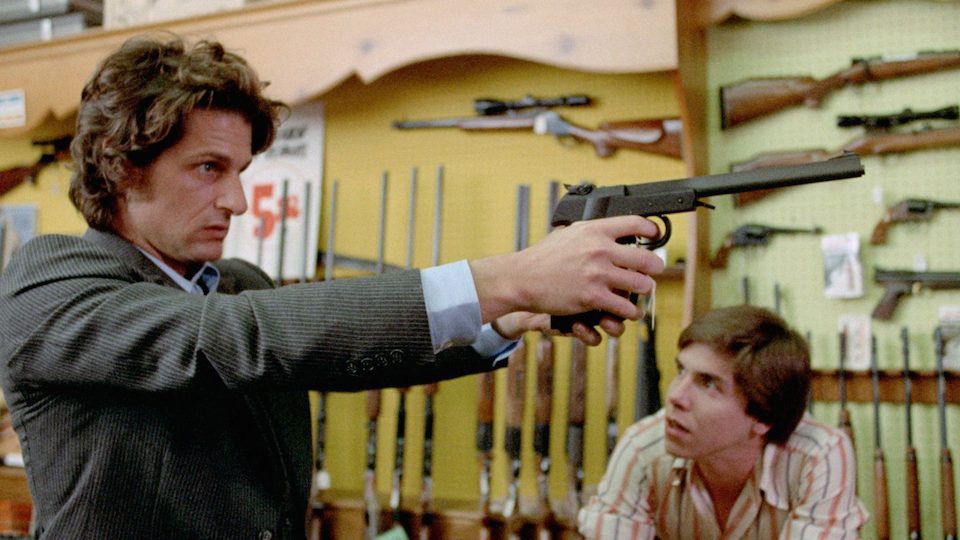
As much as Blue Sunshine represents the 70s shag rug milieu, it too belongs somewhat in the 1950s. To be certain, the plot has a whisper of the 1956 classic Invasion of the Body Snatchers (released before Philip Kaufman’s 1978 remake). But further, Zipkin, Alicia and Dr. Blume form the classic 50s sci-fi triumvirate of “the man, the woman and the scientist”. Dr. Blume fills “the scientist” role by supplying Jerry with a concoction which will help him stun one of the Blue Sunshine killers so he can prove his innocence. Alicia helps Jerry in his detective work, and like the archetypal 50s sci-fi “woman role”, indirectly puts herself in jeopardy from the monster, by agreeing to meet Flemming’s assistant Wayne Mulligan (Ray Young) at a bar, just when he too begins to have strange headaches! Although science and the love of a good woman are supportive, saving the day comes down to good old fashioned Braun- as Jerry must track down the killer who created panic at the disco, and continues its rampage at the shopping plaza rally. Additionally, Jerry’s character mirrors the classic outsider role in so much 1950s science fiction. From Kevin McCarthy in Body Snatchers to Steve McQueen in The Blob, the hero goes through great lengths to prove to the status quo the menace that he has seen lurking all along (often at the last minute). Amusingly, Jerry borrows one of Blume’s suits early in the film, presumably to discourage whatever clothing description the police may have, but also it evokes representative images of the 50s “executive suite” period where every adult male wore suits and ties in movies! In one slight example, a character at the party makes a reference to Rodan (1957). It is also amusing that the real villain of the piece, the shady Ed Flemming, is played by a co-star of the Lost in Space TV show (though produced in the 60s, is still very 50s).
Charles Gross’ interesting music score also seems out of time. The curious electronic music in the opening credits evokes memories of the Theremin (a staple in 1950s shock sequences), and further, the liberal use of vibraphones and brass-like sounds remind one more of orchestrations from the space age pop era than anything of the Swinging 70s. (The bonus CD of Gross’ previously unreleased soundtrack included in the DVD set, heard on its own, makes for very rich mood music.)
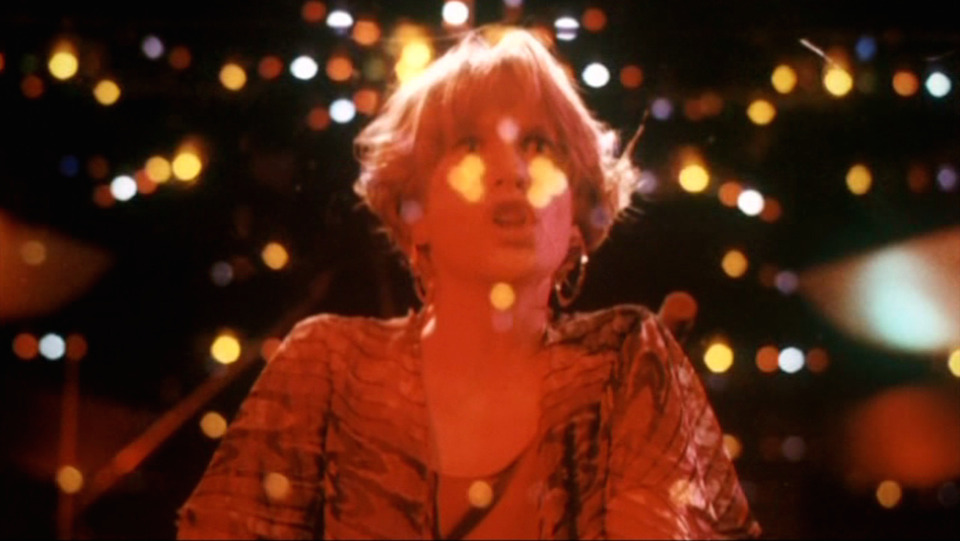
Blue Sunshine is intricately written, and is equally thoughtful in its countless little visual touches. On the director’s DVD commentary, Lieberman jokes that there is so much camera work in this film to make up for all the static shots in Squirm. I love how a 360 degree pan joins two different places in time (the moment when Jerry flees the cabin, to the police questioning Alicia). Scenes often begin with a dolly move, and there are many moments where the camera glides across the canvas in long shot. The camerawork is most wonderful in the spellbinding finale where Jerry pursues the Blue Sunshine killer through a department store. The breathtaking dollies, whip pans, and pull focuses are a superb build of suspense.
Lieberman also captures the feeling of dementia with jagged close-ups of his glaring, sweaty killers. Because we see much of the film through Jerry’s eyes, we are often treated to cut-ins of images or flashbacks (no pun intended) showing us what is on Jerry’s mind. Sometimes these moments are played for laughs (Lieberman masterfully balances suspense with subtle humour), as in one scene cutting from a Frank Sinatra puppet singing “Just in Time”, to Frannie singing the same song at the party, back to Jerry’s reaction, then to a wild shot of Frannie as a singing puppet! (Plus, there are always amusing cutaways to bald extras to reinforce Jerry’s situation.) The suggestion of his own dissolving mind is perhaps best shown in a freaky sequence where he visits the O’Malley crime scene (look for Alice Ghostley as the neighbour!) and imagines himself present at the time when the murders occurred.
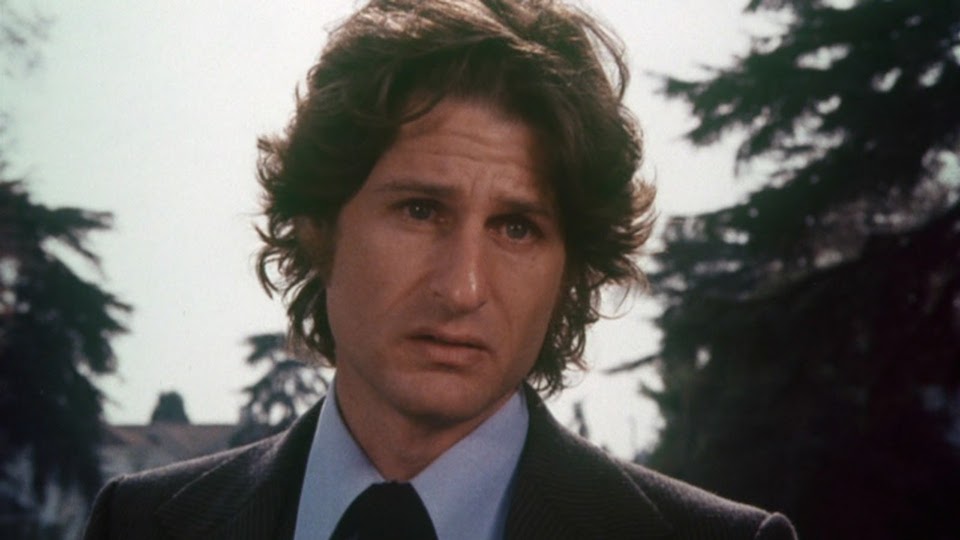
In the insightful commentary, Lieberman remarks that his greatest mistake was his direction of Zalman King. His intention was to suggest that perhaps Jerry was one of the Blue Sunshiners, and is becoming as demented as the people he is tracking down. That is why King’s acting is so over the top. All right, perhaps he is a bit much (as evidenced in the O’Malley scene above), but he is a very likeable personality who makes you care for this guy (the perfect 70s underachiever) and his strange plight.
Perhaps another facet of the film’s credibility is that it does not have A-list stars, but familiar players who lend an everyday quality to the characters. Cute, spunky Deborah Winters (who plays Alicia) is perhaps best remembered from Kotch, and should’ve had a longer career. Mark Goddard is a staple at conventions for his Lost in Space role. And the actor doing the Rodan impersonation is none other than future movie bad guy Brion James! In another story of the film’s unusual pre-production, Stefan Gierasch (Jeremiah Johnson) was originally cast as the lieutenant who pursues Jerry, but an accident forced him to relinquish the role. He has a one-scene appearance as a detective, but his original part was given to Charles Siebert, who would also be a familiar face in TV’s Trapper John. Otherwise, the cast is peopled by personable actors who could be your neighbours.
The film’s marvellous ending fades with a title card stating that 225 doses of Blue Sunshine still have yet to be accounted for. This is a sly move to keep the film’s element of believability, and leaves the door open for one or two sequels which did not materialize. Too bad—this is the rare horror film made in the past 30 years where you actually want a franchise! But this is also testament of Blue Sunshine as the classic underdog cult movie. It is made by and with people who may not be household names, and even though the movie is a true winner, it is the kind of film that needs stronger word of mouth. Although Blue Sunshine played to huge acclaim at film festivals in Europe, it barely got released in North America, as its production company, Ellanby Films, went out of business. Surely the greatest casualty of this misfortune was the career of writer-director Jeff Lieberman.
On the DVD commentary, Lieberman recalls a subsequent dinner with director John Carpenter. The latter mentioned that the role of the better-known director could easily have been reversed. Lieberman’s career always flirted with the mainstream. (Interesting trivia notes: a young Jeff Goldblum read for the Blume role; in the mid-1970s Lieberman tried to pitch a Flash Gordon style space opera, but got turned down just like the guy before him with a similar idea—George Lucas!) Alas, the projects that Lieberman deserved came few and far between. He followed up with a 1980 TV-movie Dr. Franken, and Just Before Dawn, his entry into the day’s teen-slasher sweepstakes, which had a second life on video and late-night television. Just Before Dawn (the director’s favourite of his own films) is an extremely creepy experience: the workmanlike plot is transcended by his command of atmosphere and solid characterizations (refreshingly, the people in the film are much more than one-dimensional food for slaughter).
In 1988, he returned with Remote Control, which does have an ingenious idea. People who rent a campy 1950s science fiction movie from the video store are prompted by the tape to kill! This time, 50s sci-fi is the villain, not just the template. This sly satire on the “Video made me do it” paranoia in the Rambo era somehow got away from itself: Lieberman considers this his most unhappiest film experience. This was a direct-to-video release, made to fill store shelves during the phenomenon of home video. It was a little depressing seeing this great artist being relegated to the “direct-to-video” graveyard, but one hoped that at least more projects would result. Other than his screenplay for The Neverending Story III, we were not blessed with any more of his work. But these past few months hopefully suggest a long overdue rebirth.
In the wake of Blue Sunshine’s DVD release, at long last, Jeff Lieberman got behind the director’s chair for Satan’s Little Helper, which is to be released in 2004. I had also read that there were even talks for Squirm 2! Whatever the case, Mr. Lieberman is long overdue for re-appraisal. Blue Sunshine is a splendid entry point into his career—this is the perfect movie awaiting (re)discovery.
Originally published in Vol. #1, Issue #11. No further word on Squirm 2, but Blue Sunshine has since been re-issued to DVD on one of Shout! Factory’s Elvira’s Movie Macabre double-feature disks, and a limited edition Blu-ray, including a new feature commentary by Lieberman, with a bunch of extra goodies. (Yes, I double-dipped.)
Greg Woods

Greg Woods has been a film enthusiast since his teens, and began his writing "career" at the same time- prolific in capsule reviews of everything he had watched, first on index cards, then those hardcover dollar store black journals, then an old Mac IIsi. He founded The Eclectic Screening Room in 2001, as a portal to share his film love with the world, and find some like-minded enthusiasts along the way. In addition to having worked in the film industry for over two decades, he has been a co-programmer of films at Trash Palace, and a programmer/co-founder of the Toronto Film Noir Syndicate. He has also written for Broken Pencil, CU-Confidential, Micro-Film, and is currently working on his first novel. His secret desire is for someone to interview him for a podcast or a DVD extra.