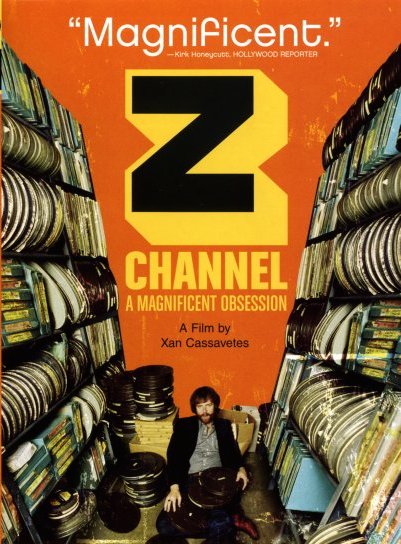
Z Channel: A Magnificent Obsession 122 min color (USA, 2004) DIR: Xan Cassavetes. PROD: Marshall Persinger, Rick Ross. MUSIC: Steven Hufsteter. DOP: John Pirozzi. CAST: Robert Altman, Jacqueline Bisset, Theresa Russell, Quentin Tarantino, F.X. Feeney, James B. Harris. Henry Jaglom, Alexander Payne, Alan Rudolph, James Woods. (IFC)
“You just never know when you’re living in a golden age.”
–Director Alexander Payne, former Z Channel customer.
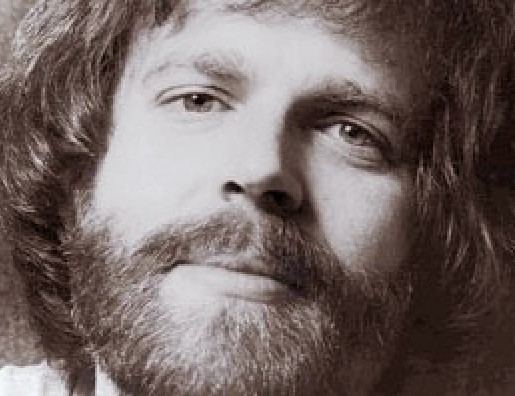
In today’s “on demand” world of the home viewing experience, it may be hard for us to think of the importance of a pay-TV channel, whose heyday was a quarter century ago. Z Channel began in 1974 as a specialty station operating within the Los Angeles bandwidth. However, when Jerry Harvey took over as programmer in 1980, it was his unique, eclectic tastes that gave Z its trademark and its major selling point over other specialty networks (like HBO and Showtime) that would try to beat Z at its own game.
One could say that “letterboxing” and “director’s cut” became household terms thanks to Jerry Harvey, as he would present films in their original aspect ratios (practically unheard of on television at the time), and in special cases, would present movies in versions as per the directors’ original intentions. As such, Z Channel, under Harvey’s wing, became a valuable learning tool for an alternate film history, and left an incredible influence on its viewers, even those who would soon become filmmakers. In the days prior to, or even during, home video, Z offered untold delights to the true film buff, that simply could not be seen elsewhere.
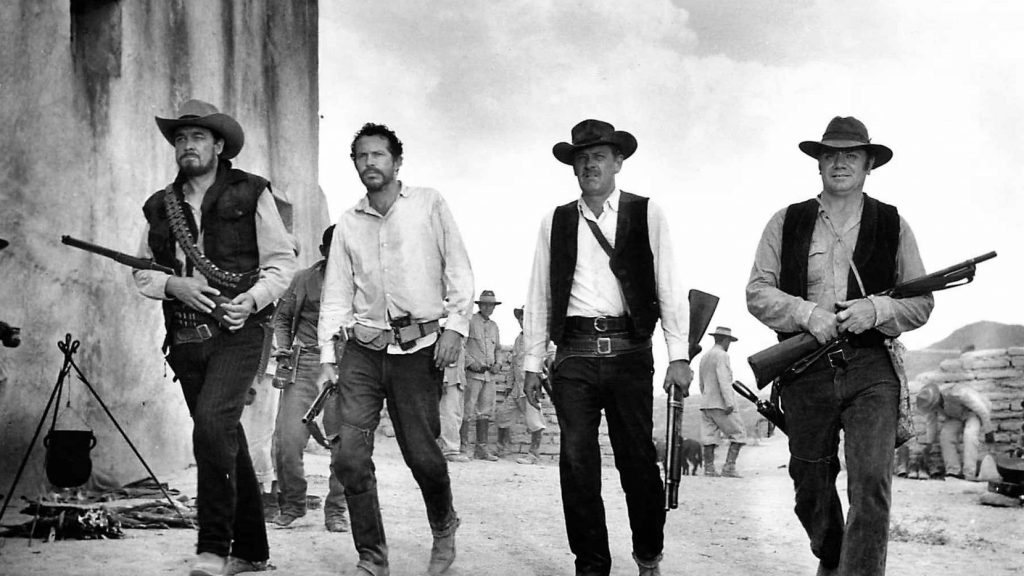
The tempestuous and eccentric Harvey began his days as a programmer for the Beverly Canon cinema, perhaps most famously bringing Sam Peckinpah’s “director’s cut” of The Wild Bunch to the screen. (This was perhaps the beginning of his surrogate paternal relationship with the erratic director.) Then after an angry letter written to SelecTV about its lousy programming, they invited him to program some films. His selection –an Italian sex film featuring Laura Antonelli, and a Greek political documentary (Attila 74, by Michael Cacoyannis)- would be indicative of his unusual programming, as he became employed at Z Channel.
In Xan (short for Alexandra) Cassavetes’ marvellous 2004 documentary Z Channel: A Magnificent Obsession (produced for the Independent Film Channel), we see how the station’s rise and fall also parallels that of Jerry Harvey’s career, from his emergence as program director, to his untimely end in a murder-suicide. It is at once a celebration of the cinema that Harvey would immerse himself in, to forget his own images of childhood abuse, yet it is also a tragic portrait of a man who still succumbed to those demons inside of him.
This project began due to Cassavetes’ recollection that the first viewings of her favourite films were all on Z Channel. At first, she had no idea who Jerry Harvey was, let alone the tragic end of his life (which mirrored the end of the station’s life, after being swallowed by a conglomerate). Eventually, she won the trust of Harvey’s friends, lovers and associates, and in turn, she emerged with a three-dimensional portrait of the troubled man who lived and died by Z Channel.
In an interview, Cassavetes stated that as she progressed with her project, she could see the lights emerge on people’s faces at the mention of Z Channel. The documentary is filled with interviews with filmmakers whose work Harvey had faith in and took a chance on (Henry Jaglom, Robert Altman et al.) and filmmakers who grew up getting an education from Z. Alexander Payne mentions his library of VHS tapes from Z broadcasts. Quentin Tarantino, who did not get the station in his neighbourhood, saw the channel vicariously from his boss’ video library when he was still working at Video Archives. Somewhere there must be a law stating that every documentary about cinema must include an interview with Tarantino. He is really over-the-top here, flailing his arms over obscure Laura Antonelli or Sam Fuller movies, but he perfectly reflects the passion that is stirred among anyone who paid to see Jerry Harvey’s programming.
Indirectly, Jerry Harvey gave a film education to Hollywood bigshots and diehard movie addicts alike, programming a selection of films that people would not seek out in theatres for free (as one interviewee jokes), yet he wisely programmed for the highest common denominator instead of the middle ground. There was no reason for him to assume that people would not be interested in this offbeat collection of forgotten Hollywood movies, undistributed foreign oddities, or scruffy independent pictures that did no business. (This is a motif lost on most people today.) And luckily, his gamble paid off.
While it is never mentioned explicitly in the film, one could say that Jerry Harvey was the last true Hollywood outlaw, since his reign was after the 1970s Hollywood Renaissance, when people no longer took chances making innovative films and instead filled screens with bubblegum to appeal to the lowest common denominators (for bigger box office returns). He was completely unconventional in business, from his investments to his attire (baggy pants, Hyde boots, untucked shirt peeking under the suit jacket).
In the days before home video, such films as Henry Jaglom’s A Safe Place, Robert Altman’s Images and James Harris’ Some Call it Loving, all quirky art house films which quickly vanished in first run, received a second life on Z. (It should be noted too, that before he took over at Z, he co-wrote Monte Hellman’s spaghetti western China 9, Liberty 37, a well-regarded movie that never found an audience… ironically, a perfect Z Channel movie).
One of the highlights of the Z enterprise was the Z Channel monthly magazine, which came to subscribers. The unbiased, frankly honest reviews of the films to be programmed would be devoured with as much fervour as the films themselves. Harvey’s good friend and Z Magazine reviewer F.X. Feeney, for instance refers to Crimes of Passion as “manure, but good manure.” (The DVD comes with a mockup of a Z Magazine, with many insightful reviews of the films featured in this documentary, and indeed, they carry a lot more substance than, say, those movie premiere mags that adorn Cineplex lobbies.)
In the early part of the 1980s, when stupidity reigned supreme on the big screen, the small screen was offering hope by Jerry Harvey that there were still good movies out there, and chances to see them. He saw the worth of such overlooked gems as Stuart Cooper’s ww2 docudrama Overlord (1975), Phillipe de Broca’s wildly inventive Le Magnifique (1973), and Zulawski’s The Main Thing is to Love (1975).
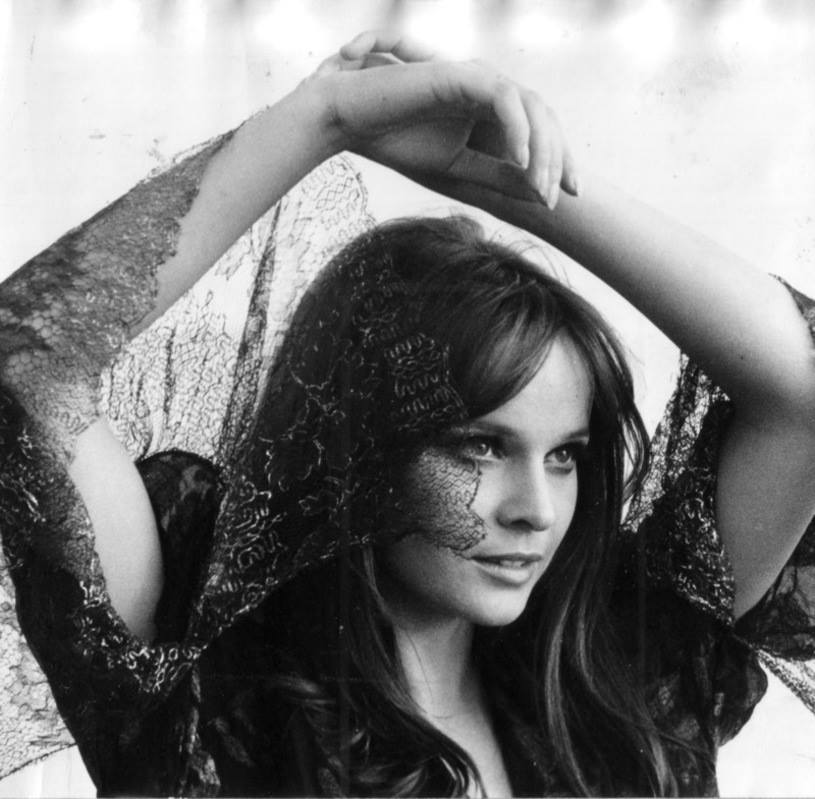
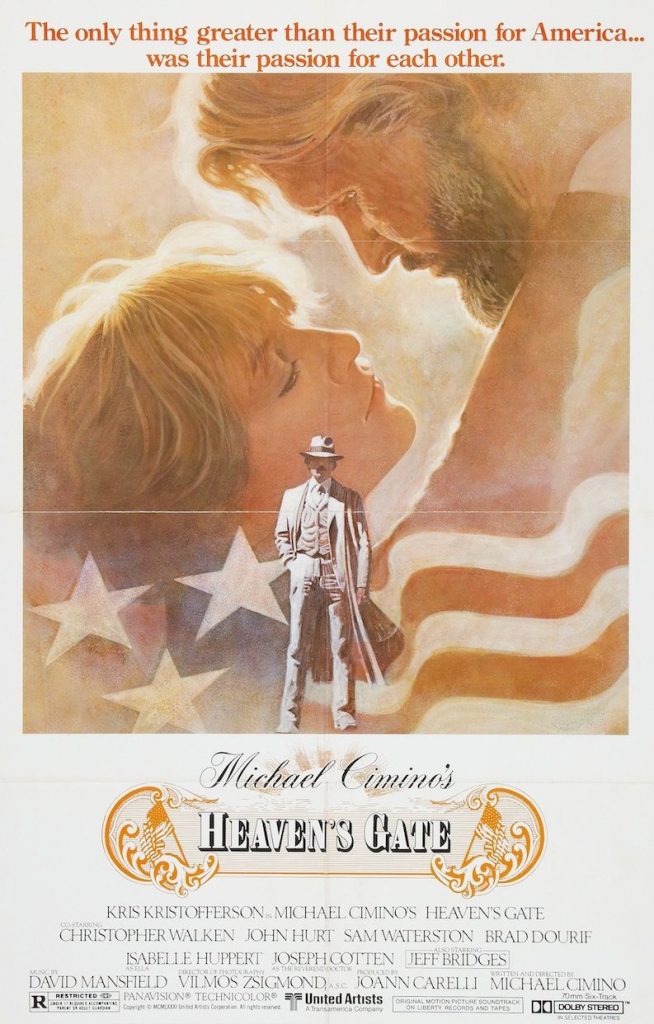
And of course, the well-remembered “Night Owl” after hours series featured soft-core films of Laura Antonelli and such works as Turkish Delight (which made Paul Verhoeven’s name in America). But not only was Z Channel giving life to forgotten films, he was also forcing people to re-evaluate their initial opinions about movies which were released after being butchered by the studio. Most infamously, Harvey had the gall to show Heaven’s Gate (then the biggest flop in motion picture history) in its original four-hour version, causing people to change their minds over a picture that was (barely) released at half that length. (Its director Michael Cimino, who would befriend Jerry Harvey, is conspicuously missing as an interview subject.) So too would viewers get opportunities to re-appraise the longer, better versions of Bertolucci’s 1900, Leone’s Once Upon a Time in America, and Visconti’s The Leopard. Das Boot was presented in its original six-hour version (made for German television), and Fassbinder’s 14-hour Berlin Alexanderplatz was also shown intact. In today’s age, where the eight o’clock movie is “time compressed” or has its final credits squeezed over to the side so the station can plug some mindless talk show garbage, it is hard to remember that anyone programmed a movie on the small screen with such tact.
“My father says there’s only right and wrong, good and evil… nothing in between. It isn’t that simple, is it?”
—Ride The High Country (1962), directed by Sam Peckinpah
Z Channel: A Magnificent Obsession is intercut with dreamlike 16mm home movie footage of Los Angeles, featuring audio from a 1985 radio interview that Jerry Harvey had on John McNally’s program, “Castaways Choice”. McNally asks a lot of questions about Harvey’s past and personal reflections, and his guest’s answers are always terse, sardonic and too formal. With the exception of some “Entertainment Tonight” video footage seen in the beginning of the movie, these sequences are truly the only time we get to know Harvey in first-person, and he appears as tempestuous and detached that his close friends suggest. At times while he speaks, we see present-day “home movie” footage of his house or the courtyards where he would take long walks and ruminate over the fate of the TV station. Perhaps these segments are the most poetic… no matter how much a movie image can replicate life, it is still only a representation, and cannot truly mask the inner suffering and pain of the viewer. Harvey’s audibly uncomfortable behaviour during these pieces only enforces this point.
Yet the fact remains that Z is the embodiment of Harvey himself, whose personality was reflected in the choices of films. (After the divorce with his first wife, Vera Anderson, he showed the 1936 screwball comedy The Moon’s Our Home which chronicles the ups and downs of a marriage). And when Z was facing financial trouble in the 1980s, it was synonymous with Harvey’s increasingly erratic behaviour. He was working non-stop, and self-medicating, to keep the machine alive, and the machine was running out. In 1984, his mentor Sam Peckinpah passed away, perhaps foreshadowing the dark days ahead.
In 1987, the Rock Group wanted to buy Z in an effort to go via satellite, but that idea was scrapped after the stock market crash. And then someone developed the idea of “Z Plus”, absurdly combining Z’s special programming with sports! Jerry was becoming even more disturbed, and due to mounting pressures, shot his new wife Deri Rudolph, and then himself… with a gun given him by Peckinpah! After having made a career out of presenting films in their proper glory, it is perhaps justice that Harvey had not lived to see the ending of Bergman’s The Silence marred with a yellow Chyron title “Don’t miss the Dodger’s game, coming up next on Z Channel.”
The story of Z Channel is full of the irony and tragedy that befits a Hollywood screenplay. It is the classic story of the rebel unable to defeat the conglomerate Goliath, succumbing to the pressure in ways foreshadowed by his sister’s theatrical suicide years earlier. Movies were Jerry Harvey’s life (and death). The legacy of Z is ultimately tragic, but one mustn’t let the dark demise overshadow what it was celebrating.
This documentary is also a reminder of the importance of cinema in our lives, and we could stand to learn a little more from a man like him. Although today films are more accessible than ever to view, it is still so easy for quality movies to get lost in the shuffle of today’s overloaded information highway. In an age where the media no longer expects its market to have taste or integrity, it is essential for us to have someone like Jerry Harvey again, pointing the way.
As such, the DVD of Z Channel: A Magnificent Obsession is itself a celebration, presenting an exceedingly generous amount of stunning film clips in pristine condition, and of course, in their proper aspect ratios. It is all the more precious to see beautifully restored excerpts of films which at the time, still had not been released to DVD in North America. It is a gift for the true cinephile- not only does it offer them a preview into some undiscovered world of cinema, Z Channel gives one a sense of purpose.
Updated from its original publication in Vol. #1, Issue #18, “Discoveries”.
Greg Woods

Greg Woods has been a film enthusiast since his teens, and began his writing "career" at the same time- prolific in capsule reviews of everything he had watched, first on index cards, then those hardcover dollar store black journals, then an old Mac IIsi. He founded The Eclectic Screening Room in 2001, as a portal to share his film love with the world, and find some like-minded enthusiasts along the way. In addition to having worked in the film industry for over two decades, he has been a co-programmer of films at Trash Palace, and a programmer/co-founder of the Toronto Film Noir Syndicate. He has also written for Broken Pencil, CU-Confidential, Micro-Film, and is currently working on his first novel. His secret desire is for someone to interview him for a podcast or a DVD extra.