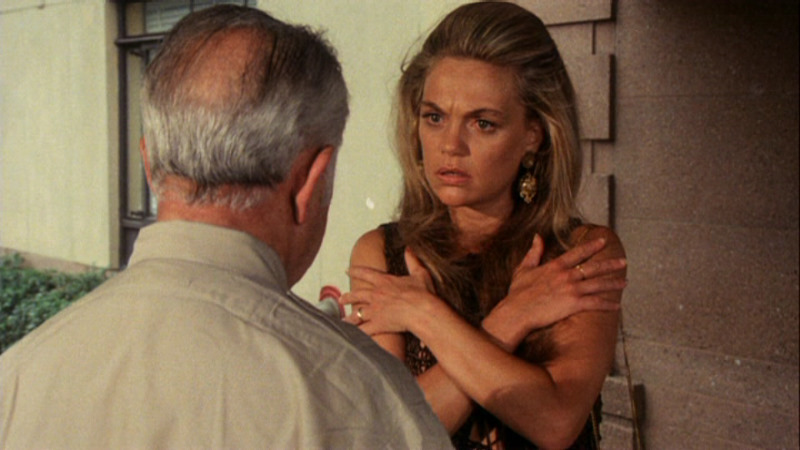
Such Good Friends (USA, 1971) 102 min color DIR-PROD: Otto Preminger. SCR: “Esther Dale” (aka- Elaine May), based on the novel by Lois Gould. MUSIC: Thomas Z. Shepard. DOP: Gayle Rescher. CAST: Dyan Cannon, James Coco, Jennifer O’Neill, Ken Howard, Nina Foch, Laurence Luckinbill, Louise Lasser, Burgess Meredith, Sam Levene, William Redfield, Rita Gam, Doris Roberts. (Paramount Pictures)
Such Good Friends is a sarcastic title for an equally sarcastic comedy-drama about Julie Messinger (Dyan Cannon), a Manhattan wife whose husband Richard (Laurence Luckinbill), a magazine editor, is going in for minor surgery to remove a mole. His doctor and friend Timmy Spector (James Coco) later reveals that a major artery was nicked during surgery, and Richard becomes comatose. While he lies in intensive care, Julie finds Richard’s little black book, which reveals that her husband has been having sex with most of the women in her social circle.
Like many of Otto Preminger’s films, this has an interesting production history. He had bought the movie rights to Lois Gould’s manuscript, before it was published as a novel, and originally commissioned Joan Micklin Silver (soon to become a great filmmaker in her own right) to adapt the property for the screen. However, the director felt that her approach was “too feminist”, so he briefly turned the project over to Joan Didion and John Gregory Dunne (who wrote Panic in Needle Park, released the same year), before hiring Elaine May to spend a few months on the screenplay. Upon completion, she requested that she would be credited with the pseudonym “Esther Dale” (named after an actress), since because there were so many hands in the adaptation before her involvement. Preminger however made it no secret that Elaine May was the screenwriter, much to her consternation. Further, he and his leading lady Dyan Cannon quarrelled long and hard over how the film should be approached. Eventually, Otto won, and adapted the property how he saw fit. One suspects that perhaps Ms. Cannon envisioned a more sensitive approach to the material. As we’ve already seen in Tell Me That You Love Me, Junie Moon, Otto Preminger is a bull in a china shop when it comes to delicate matters onscreen. However this time, without having read the book or the original screenplay, his sledgehammer approach actually benefits the material.
This is a stream-of-conscious approach, with Julie as narrator of her own drama, which wavers between reality and dreams. One of the most difficult tasks of filmmaking is finding that proper balance in narrative which is part fantasy, without seeming too pretentious or heavy-handed. Preminger found it, and this film succeeds as well as most movies that must rely on that delicate balance. In fact, if one were to imagine who else in Hollywood at the time could have made this movie, the name of Paul Mazursky would likely spring to mind, as he was already being known for movies about relationships and hang ups with modern couples. (Dyan Cannon worked on his first film, Bob & Carol & Ted & Alice.) But this was also the time in which Paul Mazursky made Alex in Wonderland, revealing that his approach to fantasy sequences is far more indulgent than even Otto Preminger would have dared.
If anything, the lapses into fantasy are shot rather matter-of-factly. In an early scene where Julie wears a revealing dress while accompanying her husband to a cocktail party, the ogling males no doubt are imagining her appearance without it. She in turn imagines what the aging author Bernard Kalman (Burgess Meredith) looks like naked, and the viewer is treated to seeing the 63 year-old actor dancing around in his birthday suit! Further, upon learning of her husband’s infidelities, she envisions her husband talking to her while she’s in the beauty salon, as a woman’s common question about her cheating partner would be whether she was still attractive enough to him.
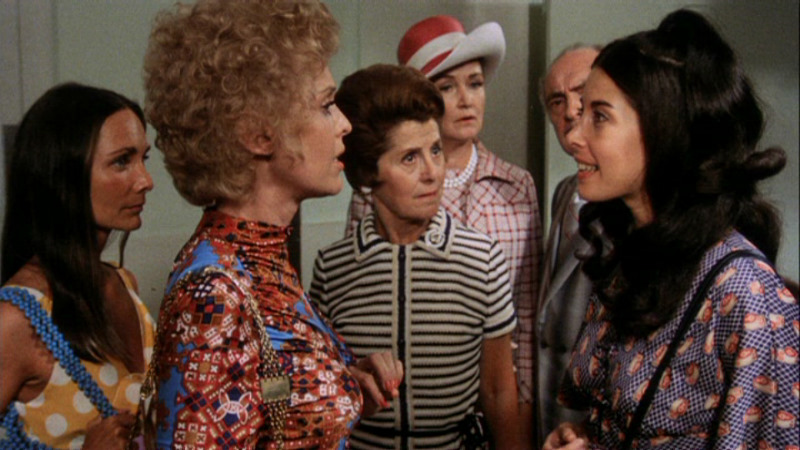
Because brother Ingo Preminger had produced the Oscar-winning M*A*S*H the previous year, I cannot help but wonder if its director Robert Altman influenced Otto somewhat. In Such Good Friends, segments often play with master shots and very little cutaways (a Preminger specialty), but also the director just casually records each scene, with the overlapping dialogue of these catty women, and the simultaneous bursts of action. This chaotic action further enhances Julie’s claustrophobic world.
But for a movie whose director fired a screenwriter for being “too feminist”, this nonetheless has a superb supporting cast of female actors: Jennifer O’Neill as her friend Miranda (one of Richard’s conquests), Louise Lasser as the spacey Marcy, Nina Foch as Julie’s “I told you so” mother, and even Doris Roberts (Everybody Loves Raymond’s mother) has a great recurring role as a woman in a waiting room. In addition to James Coco, the other major male supporting role is of Miranda’s partner Cal (played by Ken Howard), who upon learning of Miranda’s infidelity with Richard, initiates a fling with Julie, out of revenge. I love how the ensemble cast just floats in and out of the narrative, much like people do in our everyday lives.
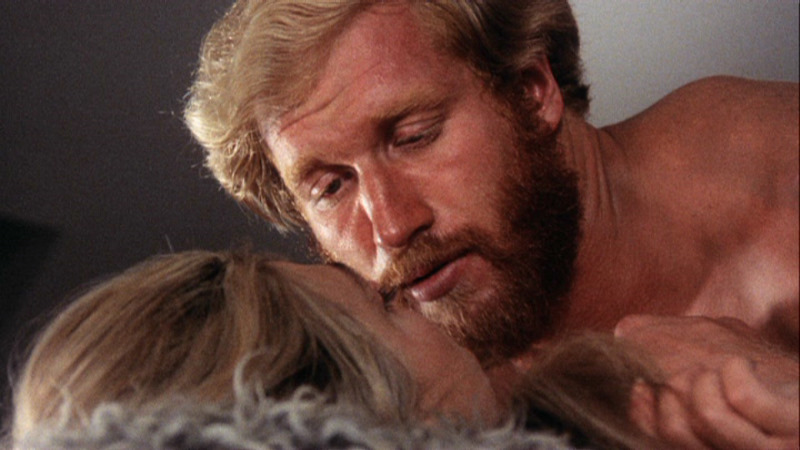
Everyone in this film, including Julie, is a bit of a cad. Thus the lack of sensitivity on Preminger’s part actually gives this narrative more bite: it is a bitchy, unsentimental movie about some bitchy, unsentimental people. The dialogue, even when humourous, has tinges of bile. This microcosm of social climbers and backstabbers may not be the most desirable people one would want to have a drink with, but ultimately, in the tragic finale, one realizes how much these destructive people nonetheless need one another.
Such Good Friends is one of the best examinations of modern lifestyles that were made during the 1970s, and today remains more fresh than most, if perhaps because Otto Preminger avoided flashy trends- even the lapses into fantasy are not dated. As such it is another very fine film from (for my money) the best decade of cinema, and surely one of director-producer Preminger’s finest achievements.
Originally published in Vol. #1, Issue #24, excerpted from a larger piece on the late period films of Otto Preminger. This film is now available on DVD via Olive Films, in a typically barebones release.
Greg Woods

Greg Woods has been a film enthusiast since his teens, and began his writing "career" at the same time- prolific in capsule reviews of everything he had watched, first on index cards, then those hardcover dollar store black journals, then an old Mac IIsi. He founded The Eclectic Screening Room in 2001, as a portal to share his film love with the world, and find some like-minded enthusiasts along the way. In addition to having worked in the film industry for over two decades, he has been a co-programmer of films at Trash Palace, and a programmer/co-founder of the Toronto Film Noir Syndicate. He has also written for Broken Pencil, CU-Confidential, Micro-Film, and is currently working on his first novel. His secret desire is for someone to interview him for a podcast or a DVD extra.