Hurry Sundown (USA, 1967) 146 min color DIR-PROD: Otto Preminger. SCR: Horton Foote, Thomas C. Ryan, based on the novel by Katya and Bert Gilden. MUSIC: Hugo Montenegro. DOP: Loyal Griggs, Milton R. Krasner. CAST: Michael Caine, Jane Fonda, John Phillip Law, Diahann Carroll, Robert Hooks, Faye Dunaway, Burgess Meredith, Robert Reed, George Kennedy, Frank Converse, Beah Richards, Rex Ingram, Luke Askew, Jim Backus. (Paramount Pictures)
Hurry Sundown has the distinction of being included in the book The Fifty Worst Films of All Time, by Harry Medved and Randy Dreyfuss. Of course most of those selected titles aren’t really the worst films ever: their inclusion is based upon whatever stills and snide quotes from reviewers that the authors could find. Nonetheless, the book has a generous helping of movies that were misguided, bloated studio projects, which this certainly is.
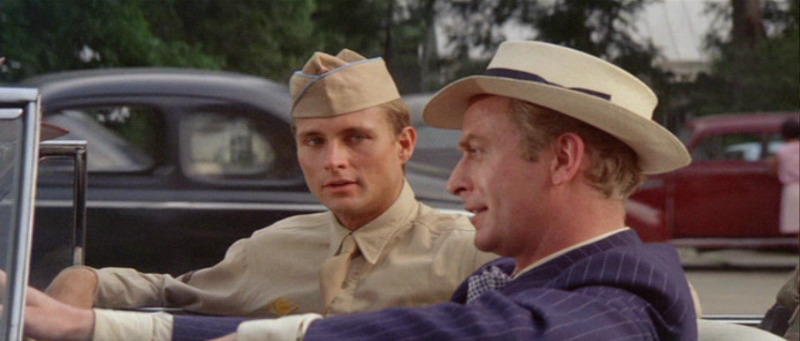
Written for the screen by Horton Foote and Thomas C. Ryan, based on the novel by Katya and Bert Gilden, this melodrama features Michael Caine in the role of Henry Warren, an entrepreneur in post-World War 2 Georgia, who is attempting to buy a huge tract of farmland, however his offers are still turned down by two holdouts: his cousin Rad McDowell (John Phillip Law) and his wife Lou (Faye Dunaway); black sharecropper Reeve Scott (Robert Hooks), whose mother Rose (Beah Richards) was the mammy of Henry’s wife Julie (Jane Fonda).
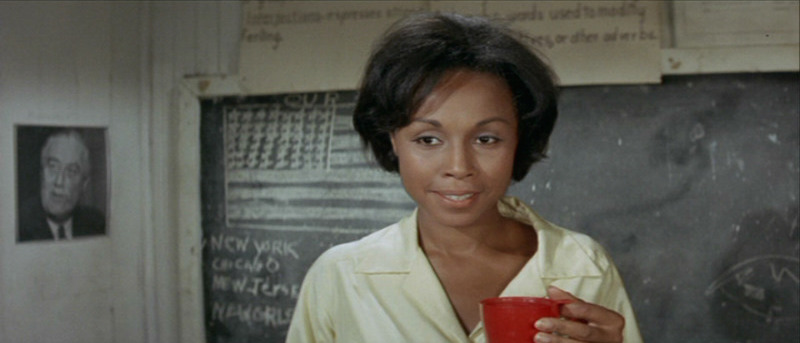
When Rose dies, Henry persuades his wife to charge Reeve with illegal ownership of his property, but a black teacher Vivian Thurlow (Diahann Carroll) manages to uncover documents proving his rightful land entitlement. Julie then decides to leave Henry because of his cruel treatment of their mentally challenged son (who is always shown onscreen crying and crying… and crying). However Henry’s dastardly deeds are not through yet, as he plots to blow up the sharecroppers’ land, which results in family tragedy, but also racial harmony, as Reeve and Rad decide to rebuild their desecrated land together.
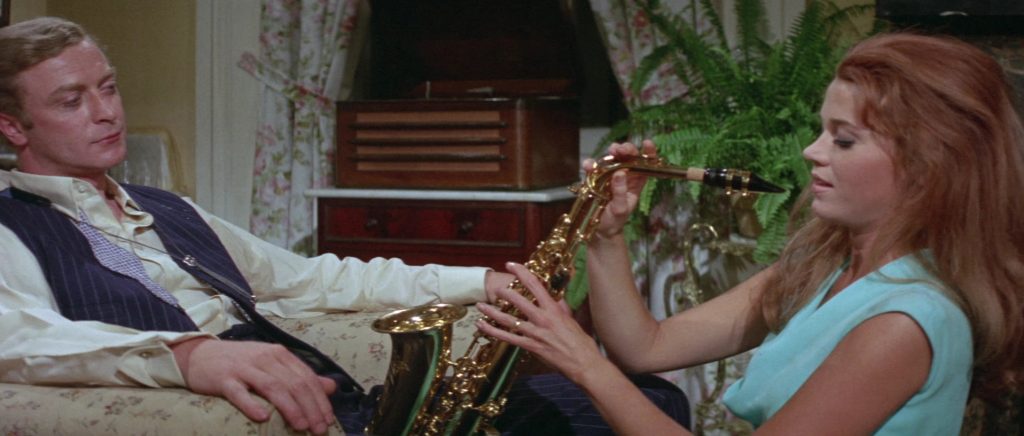
Today this film has camp appeal for the scene in which Jane Fonda plays the saxophone. The manner in which she takes the instrument from her bebop-loving husband, gently fondles and blows into it, is unabashedly vulgar, but it is actually one of the few moments of tenderness between this constantly bickering couple (suggestions of sexual violence between the two also abound).
Contrary to popular opinion, the depiction of the black characters is actually quite reverent. Reeve’s scenes with Rad are touching, and it is amusing to see the sheriff (George Kennedy) spending much time mingling with African Americans, much to the consternation of the racist authority figures in town. Representing the less liberated side of the conflict is Burgess Meredith as the racist judge who flings Quentin Tarantino’s favourite word around with much abandon.
The filming of Hurry Sundown was mired in controversy from the start. Preminger’s brother, literary agent and producer Ingo, had given him a manuscript of the as-yet unpublished novel. In his typical grandiose manner, Otto Preminger had envisioned the movie as a four-hour epic: another Gone with the Wind. (Remember his campaign a decade earlier to turn Saint Joan into the greatest thing since sliced bread, after casting first-time actress Jean Seberg as Joan of Arc after a widely publicized talent search?) However, once it was revealed that the book sold less copies than hoped, he quickly changed his tune. Horton Foote was dismissed early in the screenwriting process (although he is still given credit), as the director was unhappy with his adaptation. Preminger had also signed Faye Dunaway to a five-picture contract, but she so despised working with him, that she spent a lot of money to break that agreement. The production was also troubled with vandalism and threats, as a movie of biracial relationships was being filmed in the South.
For all of that scandal, though, it is astonishing how none of that urgency turns up on the screen. Despite the undertones of miscegenation, sensuality and family skeletons, this piece of Southern Gothic fiction is unbelievably bland. Even if one took this story as an allegory of the racial harmony to come in mankind’s future, the still hot topic of integration filmed during the heated days of the Civil Rights movement, is executed lifelessly. Despite having been shot in the South, one instead gets the sense of being on a Hollywood backlot with old-fashioned studio sets and lighting, and rather antiseptic production design. Even the black sharecroppers’ home, with Rose’s deathbed scene, is shot like Grand Hotel. Perhaps Preminger was still thinking he was making a spectacle, but instead should have given this drama more dirt and sweat. Despite his athletic build and sparkling blue eyes, the hunky romantic lead John Philip Law proves himself no Clark Gable whenever he opens his mouth. The stilted delivery instead evokes the badly dubbed beefcake in sword-and-sandal movies. (Interestingly enough, he and Fonda would soon re-team for the cult classic Barbarella.)
Originally published in Vol. #1, Issue #24, excerpted from a larger piece on the late period films of Otto Preminger. This film is now available on DVD via Olive Films, in a typically barebones release.
Greg Woods

Greg Woods has been a film enthusiast since his teens, and began his writing "career" at the same time- prolific in capsule reviews of everything he had watched, first on index cards, then those hardcover dollar store black journals, then an old Mac IIsi. He founded The Eclectic Screening Room in 2001, as a portal to share his film love with the world, and find some like-minded enthusiasts along the way. In addition to having worked in the film industry for over two decades, he has been a co-programmer of films at Trash Palace, and a programmer/co-founder of the Toronto Film Noir Syndicate. He has also written for Broken Pencil, CU-Confidential, Micro-Film, and is currently working on his first novel. His secret desire is for someone to interview him for a podcast or a DVD extra.